Strength matters in daily life. It helps you get out of bed, carry groceries, climb stairs, lift a child, and move safely from a wheelchair to another seat. Strength is not only about muscles or appearance. It is about movement, comfort, independence, and confidence. That is why Functional Strength Training matters for people of all ages and ability levels.
That is where functional strength training becomes important.
Functional strength training focuses on exercises that support real-life movement. Rather than training muscles in isolation, it helps the body work as a single system. The goal is simple: make daily tasks easier, safer, and less tiring.
The best part is that functional strength training suits everyone.
Age, fitness level, injury history, disability, or mobility limitations do not prevent someone from building strength. Whether a person walks, uses a cane, uses a wheelchair, or is returning to exercise after surgery, functional strength training can be tailored to their needs.
This makes it a strong option for people seeking movement that supports long-term health and a better quality of life.
What Is Functional Strength Training?
Functional strength training is exercise centred on movements people use in everyday life.
These movements often include:
- Pushing
- Pulling
- Squatting
- Reaching
- Rotating
- Lifting
- Carrying
- Standing up
- Balancing
For example, sitting down in a chair and standing back up uses leg, core, and hip strength. Picking something up from the floor uses balance, hip mobility, and back control. Reaching into a cabinet uses shoulder movement and upper-body strength.
Functional training prepares the body for these real actions through practical functional training exercises.
Traditional gym workouts often target one muscle group at a time. Functional training focuses on movement patterns, helping multiple muscle groups work together.
That means training becomes more useful in daily life.
Why Functional Strength Training Matters
Many people think strength training is only for athletes or bodybuilders, but that idea is outdated.
Strength training supports nearly every person, including:
- Older adults
- People recovering from injury
- Individuals with disabilities
- People with chronic pain
- Beginners starting fitness
- Busy adults with limited workout time
Functional training helps with more than just physical strength.
It can support:
Better Balance
Poor balance increases fall risk, especially for older adults or people with movement limitations.
Training balance and stability helps reduce that risk.
Better Mobility
Strength supports joint movement. When muscles are weak, movement often becomes stiff or painful.
Regular functional movement training helps make daily motion smoother.
Better Endurance
Simple tasks can feel exhausting when the body lacks strength.
Building strength helps people move for longer with less fatigue.
Better Independence
Independence matters at every age.
The ability to dress, cook, transfer, walk, or move without assistance can improve daily living and emotional well-being.
Functional Strength Training for Every Ability
One of the biggest strengths of functional training is its accessibility.
There is no single “correct” body type for exercise.
Every person moves differently. That includes people with:
- Spinal cord injuries
- Cerebral palsy
- Multiple sclerosis
- Stroke history
- Amputation
- Parkinson’s disease
- Arthritis
- Chronic pain
- Autism or sensory challenges
Training should respect how a person moves today while helping them build strength safely.
Progress looks different for each person.
For one person, it may mean lifting heavier weights.
For another, it may mean standing for ten extra seconds.
For someone else, it may mean transferring from bed to chair with less assistance.
All progress counts, especially in exercise programs for people with disabilities, where progress is highly individual.
Core Principles of Functional Strength Training
A good program adheres to several simple principles.
Train Real Movements
Focus on movements used during daily life.
Examples include:
- Sit to stand
- Carrying weight
- Pushing doors
- Pulling resistance bands
- Step-ups
- Reaching overhead
These exercises have direct value beyond workouts.
Focus on Stability First
Before adding weight, build control.
A stable body moves more effectively.
Core strength, posture, and joint control are crucial here.
Work Within Safe Range of Motion
Not everyone can move through a full range.
That is okay.
Pain-free movement matters more than perfect form.
Small, controlled movements still build strength.
Progress Slowly
Strength builds over time.
Sudden increases in difficulty may cause pain or injury.
Small improvements often lead to long-term success.
Functional Strength Training Exercises for Different Ability Levels
There is no single workout for everyone. Below are examples that can be adjusted based on mobility.
Standing Functional Strength Exercises
These work well for people who can stand independently or with support.
Chair Squats
Sit down, then stand back up from a chair.
Benefits:
- Leg strength
- Core stability
- Better mobility
Farmer Carries
Hold weights or household items while walking.
Benefits:
- Grip strength
- Core control
- Posture support
Wall Push-Ups
Push against a wall rather than the floor.
Benefits:
- Chest strength
- Shoulder control
- Arm power
Step-Ups
Step onto a low platform.
Benefits:
- Leg power
- Balance
- Coordination
These are simple yet practical strength training exercises for daily movement.
Seated Functional Strength Exercises
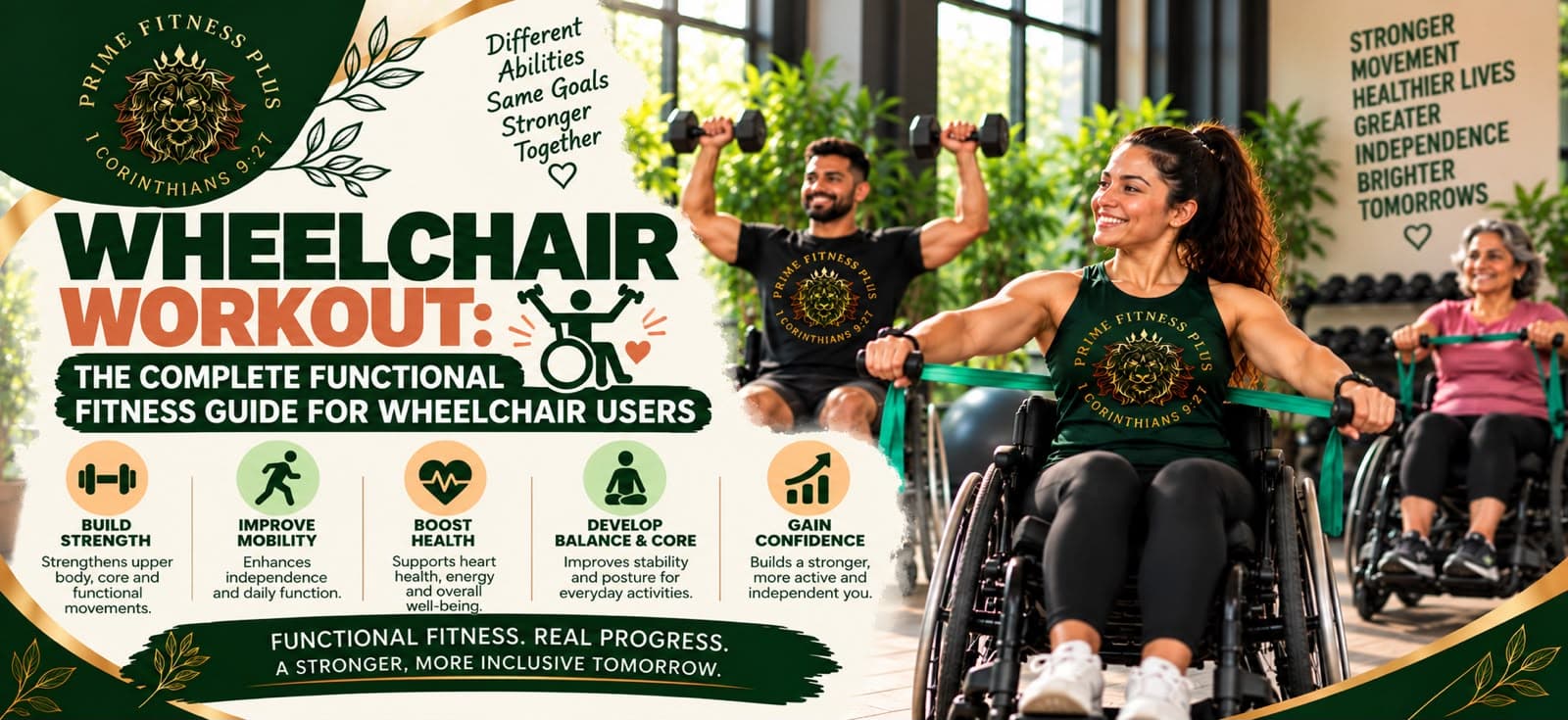
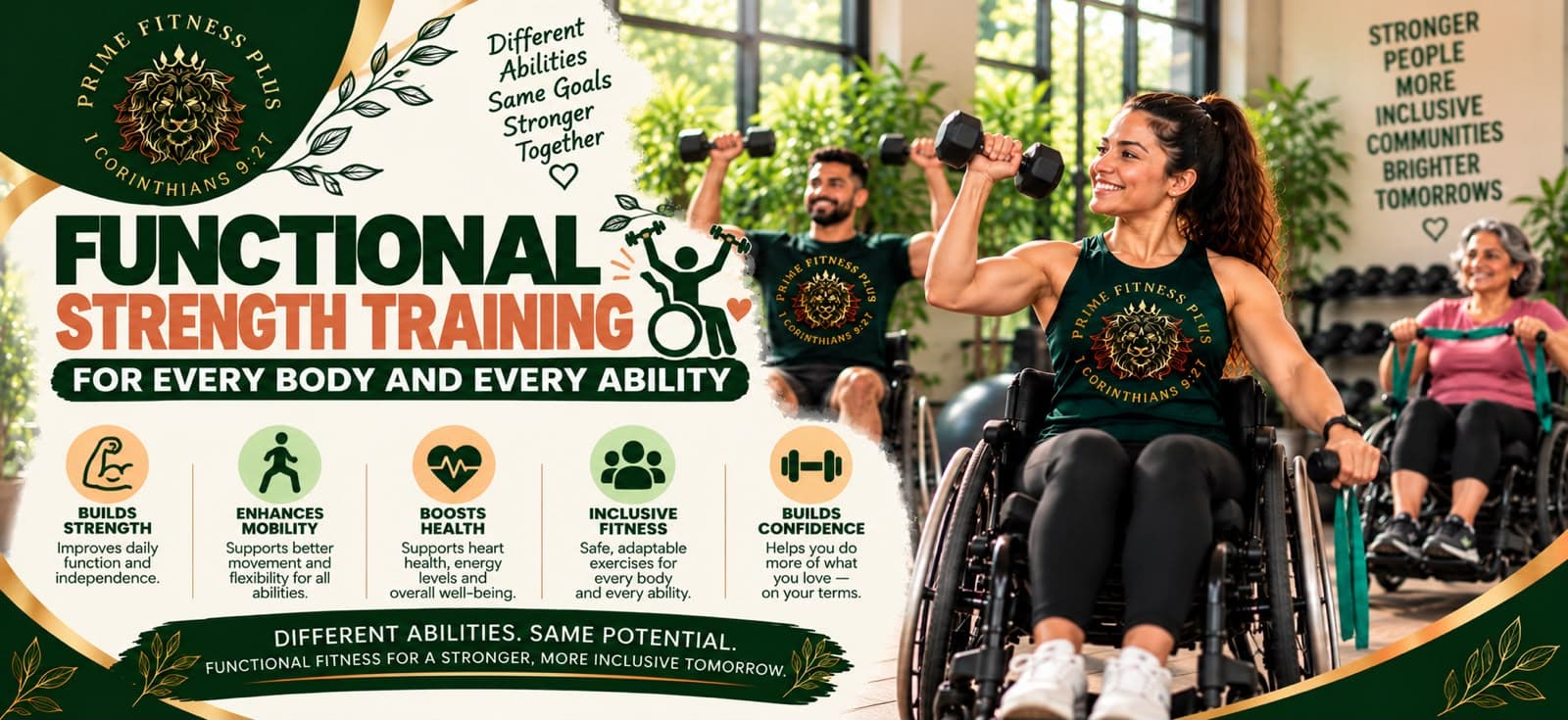
Perfect for wheelchair users or those with limited ability to stand.
Seated Shoulder Press
Press light dumbbells or bands overhead.
Benefits:
- Shoulder strength
- Arm function
- Daily reaching ability
Seated Row
Pull resistance bands toward the body.
Benefits:
- Upper back strength
- Better posture
Medicine Ball Twists
Rotate slowly from side to side.
Benefits:
- Core strength
- Rotational control
Seated Leg Lifts
Lift one leg at a time if possible.
Benefits:
- Hip strength
- Lower body activation
Bed or Low-Mobility Exercises
Useful for people recovering from illness, surgery, or severe mobility limitations.
Glute Bridges
Lift hips while lying down.
Benefits:
- Hip strength
- Core support
Heel Slides
Slide heels toward hips and back.
Benefits:
- Knee mobility
- Leg activation
Arm Raises
Raise arms with or without light weights.
Benefits:
- Shoulder mobility
- Upper body strength
Even simple movements matter when repeated regularly.
Functional Training and Adaptive Fitness
Adaptive fitness means exercise that works with a person’s abilities rather than imposing a rigid system.
This matters because standard fitness spaces often overlook people with disabilities.
Adaptive functional training changes that.
Programs may use:
- Resistance bands
- Therapy balls
- Chairs
- Suspension straps
- Wheelchair-accessible equipment
- Support bars
- Water therapy
Coaches trained in adaptive fitness training understand movement differences and safety concerns.
This creates more inclusive training spaces and supports better fitness programs.
A good adaptive program asks:
- What movements matter most to this person?
- What daily tasks feel difficult?
- What limitations need support?
- What strengths can we build from?
These questions help create meaningful goals.
Common Myths About Functional Strength Training
Many people avoid strength training because of common myths.
Myth 1: You Need Heavy Weights
False.
Body weight, resistance bands, and light dumbbells can build strength.
Resistance matters more than equipment type.
Myth 2: Disabled People Should Avoid Strength Training
False.
Many people with disabilities benefit greatly from structured training.
The key is proper guidance and exercise selection, especially in exercise programs for people with disabilities.
Myth 3: Strength Training Is Only for Young People
False.
Older adults gain significant benefits from strength training.
Muscle loss occurs with age, but movement training helps slow that decline.
Myth 4: Pain Means Progress
False.
Pain is not a sign of good training.
Challenge is normal. Sharp pain is not.
Listen to the body.
How Often Should You Train?
For most people, functional strength training works well alongside:
- 2 to 4 sessions per week
- 20 to 60 minutes per session
Beginners can start small.
Even 10–15 minutes of consistent movement can help.
A simple weekly plan might include:
Day 1: Upper body + core
Day 2: Lower body + balance
Day 3: Full body movement
Rest and recovery matter too.
Muscles need time to recover between training sessions.
Signs Your Program Is Working
Progress is not always visible in the mirror.
Functional progress often appears in everyday life.
Look for signs such as:
- Standing more easily
- Less fatigue during daily tasks
- Better balance
- Less joint discomfort
- Improved posture
- Greater confidence in movement
These changes often matter more than weight loss or muscle mass.
Functional strength is about living better through consistent functional movement training and practical movement habits.
Choosing the Right Trainer or Program
Not all fitness programs are built for every ability level.
When choosing a trainer or program, look for someone who understands:
- Movement limitations
- Injury history
- Adaptive exercise methods
- Accessibility needs
- Safe progression
Good trainers ask questions before assigning exercises.
They respect individual abilities and goals.
A quality program feels supportive, safe, and practical, especially in inclusive fitness programs.
Final Thoughts
Functional Strength Training is not about chasing perfect workouts or pursuing extreme fitness goals. It is about building strength for real life.
Every body deserves movement.
Every ability deserves respect.
Whether someone is a beginner, an older adult, an athlete, or living with a disability, strength training can support better movement, greater independence, and greater daily comfort.
Progress need not look dramatic.
Small steps matter.
One extra repetition, one smoother transfer, one easier walk to the kitchen—these are meaningful wins.
Functional strength training meets people where they are and helps them move forward, step by step.
That is why it remains one of the most practical ways to build strength for every body and ability.