Cardiovascular exercise need not mean running, jumping, or using a treadmill. Adaptive Cardiovascular Training offers people with disabilities practical ways to work the heart and lungs through movements that suit their abilities. Seated marching, arm cycling, wheelchair-based movement, resistance training, and other low-impact activities can all play a role in a well-planned fitness routine.
For people with limited mobility, getting started can feel challenging. A standard cardio program may not account for wheelchair use, balance limitations, reduced range of motion, limb differences, or other physical needs. Adaptive training takes a different approach, focusing on what a person can do and building activity from that starting point.
The goal is not simply to complete a workout. Regular cardiovascular activity can help improve stamina, support heart health, make daily activities less tiring, and boost confidence in movement.
What Is Adaptive Cardiovascular Training?
Adaptive Cardiovascular Training is cardio exercise tailored to a person's physical abilities, mobility level, fitness experience, and goals. The movement pattern, exercise position, duration, resistance, and rest periods can all be adjusted.
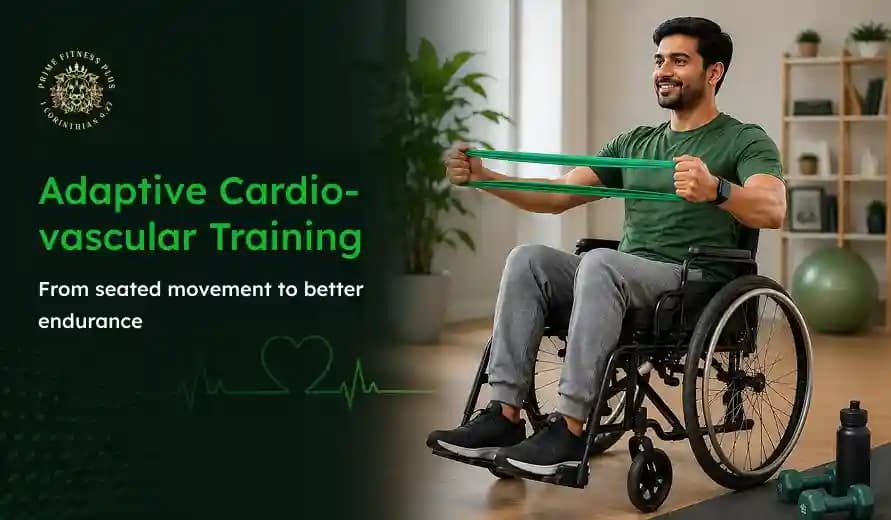
A person who cannot stand for long periods may perform cardio exercises while seated. Someone who uses a wheelchair may use wheelchair propulsion, seated punches, arm cycling, or other upper-body exercises. A person with limited leg movement may use equipment that allows the arms to provide most of the workload.
The basic purpose remains the same: raise the heart rate through repeated movement while keeping the activity suitable for the individual.
A well-planned session may include:
- A gradual warm-up
- Seated or standing cardio movements
- Short work periods
- Rest or lower-intensity periods
- Mobility exercises
- A gradual cool-down
The right structure depends on a person's abilities and health needs. Someone new to exercise may start with just a few minutes of activity, while someone with more experience may tolerate longer sessions.
Why Adaptive Cardiovascular Training Matters for People With Disabilities
Cardiovascular fitness plays a role in many everyday activities. Walking through a store, moving around the home, transferring between surfaces, using a wheelchair, climbing stairs, or participating in recreational activities can require sustained physical effort.
Regular cardio training can help the body handle these demands with less fatigue over time. It may also support circulation, heart and lung function, muscular endurance, mood, and overall physical fitness.
For wheelchair users, upper-body cardio can be especially useful because the arms may do much of the work required for mobility. Repeated upper-body training can build stamina for wheelchair movement and other daily tasks.
Seated Exercises for Adaptive Cardiovascular Training
Seated exercises are a practical starting point for many people with limited mobility. They can be performed in a stable chair, depending on the person's needs and ability to maintain safe positioning.
Seated Marching
Sit tall and alternate lifting the knees. If leg movement is limited, the motion can be smaller. The arms can move at the same time to create more continuous activity.
Start slowly for 30 seconds to a minute. Rest as needed, then repeat.
Seated Arm Circles
Extend the arms comfortably and make small circles. Gradually increase the circle size if the movement feels comfortable.
This exercise can help maintain continuous upper-body movement while preparing the shoulders for more active exercises.
Seated Punches
Alternate forward punches at a comfortable pace. Keep the shoulders relaxed and avoid locking the elbows.
The pace can be adjusted based on fitness level. Faster punches create a more demanding cardio interval, while slower movements are suitable for a warm-up.
Seated Side Reaches
Reach one arm to the side, return to the centre, and repeat on the opposite side. The movement can be performed slowly or at a faster pace.
This adds trunk and upper-body movement to a seated cardio workout.
Seated Arm Cycling
An arm cycle or upper-body ergometer can provide a structured cardio option for people who cannot use a traditional stationary bike. Resistance and speed can usually be adjusted to match the person's current fitness level.
Adaptive Cardiovascular Training for Wheelchair Users
Wheelchair users can participate in cardiovascular exercise through several movement options. The best option depends on wheelchair type, transfer ability, upper-body function, balance, and fitness level.
Other options may include:
- Arm ergometers
- Seated boxing movements
- Seated marching
- Medicine-ball movements when appropriate
- Wheelchair-based recreational activities
- Adaptive cycling equipment
Wheelchair users should also pay attention to shoulder comfort. Repeated wheelchair use already places regular demands on the shoulders, so exercise selection and technique should account for that workload.
How to Build Better Endurance Gradually
Endurance develops through repeated training rather than a single difficult workout. A beginner does not need to exercise for a long period right away.
One simple approach is to use short activity intervals. For example:
Beginner session
- 3 minutes of gentle warm-up
- 30 seconds of seated cardio
- 60 seconds of easy movement or rest
- Repeat 4 to 6 times
- 3 minutes of gentle cool-down
As stamina improves, active periods can become longer. A person might progress from 30-second intervals to one-minute intervals and later to two- or three-minute periods.
Adaptive Cardiovascular Training and Exercise Intensity
Exercise intensity should match the person, not a standard workout template.
Heart-rate monitoring can be useful for some people, but it is not appropriate as the sole measure for everyone. Certain medications can alter heart-rate responses, and some disabilities can make standard heart-rate targets less useful.
Other signs can help gauge intensity:
- Breathing becomes faster but remains controlled
- Muscles feel active without severe discomfort
- The person can still communicate
- Fatigue is manageable
- Recovery occurs after the activity period
A person should stop exercising and seek medical advice when unusual chest pain, severe shortness of breath, fainting, or other concerning symptoms occur.
Building a Complete Adaptive Fitness Routine
Cardio works well when combined with other forms of movement. Adaptive fitness training can include cardiovascular training, strength exercises, mobility activities, balance work, and movements related to everyday tasks.
For some individuals, inclusive fitness programs can provide access to equipment, instruction, and exercise settings tailored to different mobility levels. These programs can be useful for people who feel uncomfortable in traditional fitness environments.
Creating a Weekly Cardio Routine
A consistent weekly schedule can make exercise easier to maintain. The exact amount of activity should depend on the individual's current condition and professional recommendations.
A sample beginner schedule could look like this:
Monday: 10–15 minutes of seated cardio
Tuesday: Light mobility or rest
Wednesday: 10–15 minutes of seated cardio intervals
Thursday: Rest or gentle movement
Friday: 15 minutes of adaptive cardio
Saturday: Recreational movement or light cardio
Sunday: Rest
This schedule is just an example. Some people may need shorter sessions, while others may be ready for longer workouts.
People who have not exercised for a long time can start with small amounts and gradually increase the duration. Two or three short sessions may also be easier to manage than one longer workout.
Functional Goals and Personalised Fitness Programs
Cardiovascular fitness supports more than exercise performance. Functional fitness training connects physical activity with tasks that matter in everyday life, such as moving around the home, reaching, transferring, pushing a wheelchair, and participating in community activities.
How a Trainer Can Support Adaptive Cardio
A qualified adaptive fitness professional can help identify appropriate exercises, positioning, equipment, resistance levels, and progression strategies.
This can be especially helpful for people unsure how to adapt a traditional exercise. A trainer can assess movement quality, make adjustments when discomfort arises, and help create a routine aligned with real-life goals.
Common Mistakes to Avoid
Starting too hard is one of the most common problems in cardio training. A workout should not leave someone exhausted for days.
Other mistakes include:
- Skipping the warm-up
- Using equipment without proper instruction
- Ignoring shoulder or joint discomfort
- Comparing progress with another person's workout
- Increasing duration and intensity at the same time
- Exercising through unusual pain
- Treating rest as a failure
Progress may look different for each person. Being able to exercise for two more minutes, complete more repetitions, recover faster, or perform a daily task with less fatigue can all be meaningful progress.
Final Words: Building Endurance One Movement at a Time
Adaptive Cardiovascular Training offers people with disabilities more ways to participate in cardio exercise without relying on traditional workouts. Seated marching, arm movements, wheelchair propulsion, arm cycling, and other adaptive exercises can help build stamina when performed consistently and at an appropriate intensity.
The best routine is one that suits the person's abilities, goals, environment, and daily schedule. Starting with a manageable activity, allowing adequate recovery, and gradually increasing the workload can create a sustainable path to better endurance.
For those who need additional guidance, working with an adaptive fitness professional can provide support with exercise selection, positioning, equipment, and progression. With the right approach, cardiovascular exercise can become a practical part of an inclusive fitness routine.