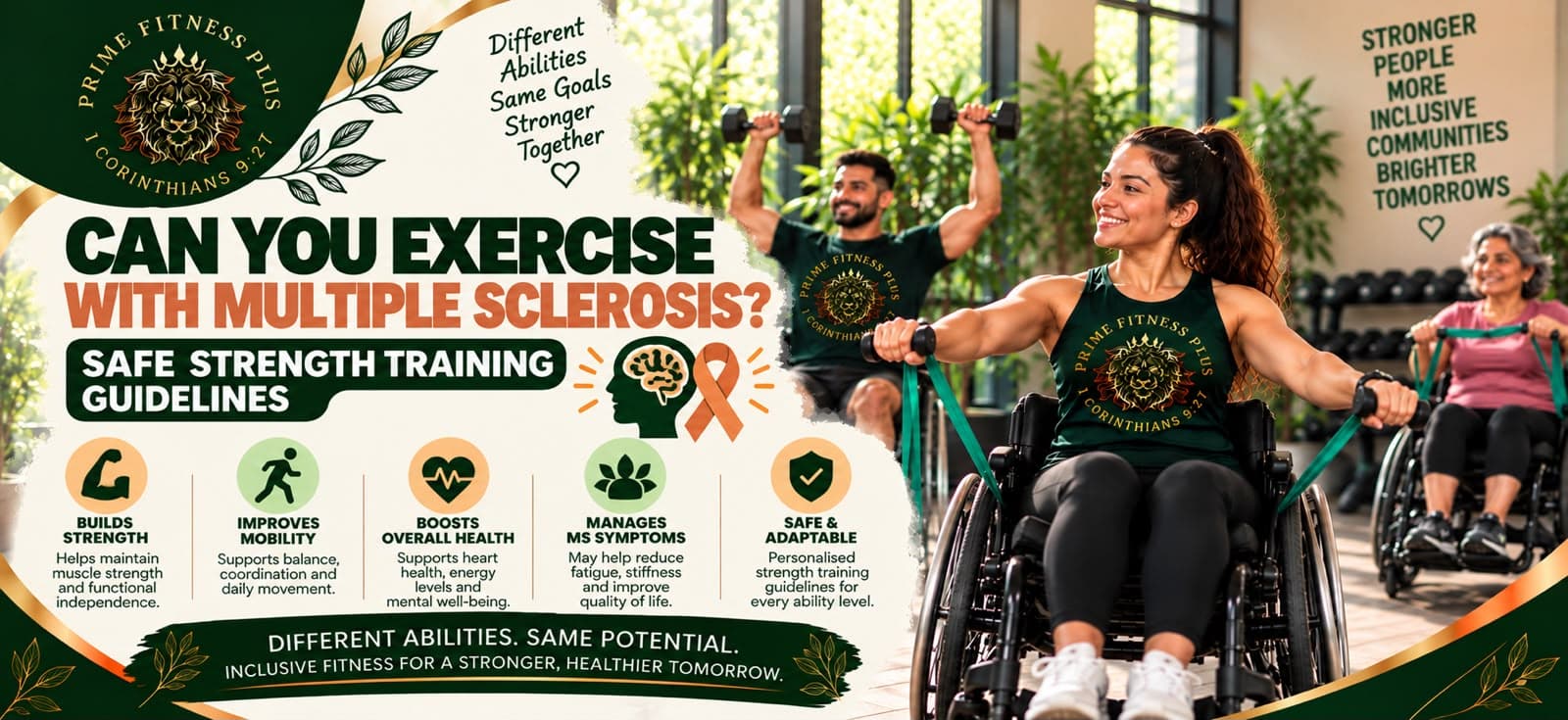
Multiple sclerosis (MS) can change how the body moves, feels, and responds to daily activity. Many people living with MS experience symptoms such as fatigue, stiffness, numbness, balance issues, and muscle weakness. Because MS is a central nervous system disorder, movement can become harder over time. This raises an important question: can exercise still be safe, and what are the right Strength Training Guidelines to follow?
The short answer is yes. In many cases, exercise can be a helpful part of managing life with MS when done safely and with proper planning. Many disability and adaptive fitness programs and training systems now support people with neurological conditions.
What Is Multiple Sclerosis?
Multiple sclerosis is a long-term condition that affects the brain and spinal cord.
MS occurs when the immune system attacks myelin, the protective layer around nerve fibres. When this layer is damaged, signals between the brain and body slow down or are interrupted.
This condition is known as a central nervous system disorder and can lead to a wide range of physical challenges.
Common multiple sclerosis symptoms include:
- Muscle weakness
- Balance issues
- Poor coordination
- Tremors
- Fatigue
- Stiffness or spasticity
- Numbness or tingling
- Trouble walking
- Vision problems
- Pain
Symptoms vary from person to person. Some people experience mild discomfort, while others face significant mobility limitations.
Because MS affects movement and energy levels, a safe multiple sclerosis fitness program should match the person’s current abilities.
Strength Training Guidelines for Multiple Sclerosis Exercise
When planning an exercise for multiple sclerosis, safety should always come first.
Research shows that structured and resistance exercise can support movement, balance, and daily function. The key is selecting the appropriate intensity, duration, and recovery.
Exercise does not worsen MS. However, overtraining can temporarily worsen MS symptoms, particularly fatigue and weakness.
A good multiple sclerosis fitness program should focus on:
- Controlled movement
- Proper recovery
- Safe resistance levels
- Cooling strategies
- Good form
This approach supports safer workouts and improved long-term consistency.
Why Strength Training Matters
Strength training focuses on improving muscle strength and body support.
MS can reduce movement over time. Less movement often leads to muscle loss and reduced muscle endurance.
Weak muscles can cause:
- Poor posture
- Joint stress
- Lower walking ability
- Higher fall risk
- Reduced independence
This is why strength training for MS has become an important part of neurological rehabilitation and adaptive fitness.
Helps Maintain Muscle Strength
Muscles weaken when they are not used regularly.
If MS symptoms limit movement, muscle loss can occur more quickly. Regular resistance exercise helps activate muscles and reduce muscle weakness in MS.
Stronger muscles support:
- Walking
- Standing
- Stair climbing
- Chair transfers
- Daily movement
This supports better independence.
Supports Better Balance
Balance problems are common among people with MS.
Weak legs and poor core control often make walking unstable. Functional movement training that targets the hips, legs, glutes, and core may improve balance.
Better balance reduces fall risk and improves overall body control.
May Reduce Fatigue Over Time
Fatigue is one of the most common symptoms of MS.
Although workouts burn energy, regular training can improve stamina and muscle endurance over time.
The goal is not to exhaust sessions.
The goal is to achieve manageable movement with proper recovery.
Strength Training Guidelines for Exercise for Multiple Sclerosis
Safe exercise requires planning. These Strength Training Guidelines help reduce risk and improve physical ability.
Get Medical Clearance First
Before beginning exercise for multiple sclerosis, consult a healthcare provider.
- Neurologist
- Physical therapist
- Rehabilitation specialist
- Adaptive fitness coach
This matters more if you have:
- Frequent falls
- Severe fatigue
- Major mobility issues
- Recent relapse
Professionals often combine gym routines with physical therapy exercises to progress more safely.
Start Slow
One common mistake is doing too much too soon.
That often causes fatigue-related crashes.
Start with:
- 15–20 minutes
- 2–3 sessions weekly
- Light resistance
Slow progress supports improved recovery.
Focus on Major Muscle Groups
Training should improve daily movement patterns.
Prioritize:
- Legs
- Core
- Back
- Glutes
- Chest
- Shoulders
These muscle groups support walking and maintain posture.
Use Light to Moderate Resistance
Heavy lifting is not necessary.
Good resistance tools include:
- Bands
- Light dumbbells
- Cable machines
- Bodyweight exercises
- Seated exercises
A beginner-friendly target:
8–12 repetitions with good form
This works well for progressive strength training.
Rest Between Sets
Rest matters more in MS training.
Take 60–120 seconds between sets.
Longer rest is completely acceptable.
Recovery improves training quality and reduces overheating.
Strength Training Guidelines for Safe Workouts for MS Patients
Heat sensitivity is common in people with MS.
Many people notice that symptoms worsen when body temperature rises. This is why safe workouts for MS patients should include cooling strategies.
Use:
- Air-conditioned spaces
- Cooling towels
- Cold water
- Fans
- Morning sessions
- Loose clothing
Managing body temperature makes exercise safer.
Good form also matters.
Poor technique increases the risk of injury. Controlled movement matters more than repetition count.
Best Strength Exercises for People With MS
Exercise choice depends on current ability and mobility limitations.
Below are beginner-friendly movements commonly used in adaptive exercise for neurological conditions.
Seated Leg Extensions
Targets thigh muscles.
Benefits:
- Knee support
- Leg strength
- Better walking ability
Useful for reducing muscle weakness in MS.
Sit-to-Stand
Practical for daily life.
Benefits:
- Leg strength
- Hip strength
- Functional mobility
This movement is common in functional movement training.
Wall Push-Ups
Good beginner upper-body exercise.
Benefits:
- Chest strength
- Arm support
- Shoulder stability
Safer than floor push-ups.
Seated Rows With Bands
Targets upper back muscles.
Benefits:
- Better posture
- Shoulder support
- Back strength
Often used in physical therapy exercises.
Glute Bridges
Targets hips and glutes.
Benefits:
- Pelvic stability
- Lower-body support
- Core control
Supports walking mechanics.
Core Bracing
Core strength improves posture and balance.
Simple core drills can improve overall body control.
These exercises are commonly used in adaptive exercise for neurological conditions and in neurological rehabilitation programs.
How Often Should Someone With MS Exercise?
There is no single perfect schedule.
Training frequency depends on:
- Symptom severity
- Fatigue
- Recovery speed
- Mobility
General beginner guidance:
Strength training: 2–3 times weekly
Mobility work: several times weekly
Rest days: between harder sessions
Recovery is part of progress.
This schedule works well for many people doing strength training for MS.
Signs You Are Doing Too Much
Reduce training intensity if you notice:
- Fatigue lasting over 24 hours
- Difficulty walking after workouts
- Increased spasticity
- Poor sleep
- Heavy soreness
- Repeated balance loss
Exercise should challenge the body without overloading it.
Working With Adaptive Fitness Professionals
People with MS often benefit from guided training sessions.
Adaptive specialists understand:
- Weakness
- Fatigue
- Balance issues
- Neurological limitations
This is why many disability-focused fitness programs now combine adaptive fitness training, progressive strength training, and clinical support.
Professional guidance can improve safety and consistency.
Final Thoughts
Can you exercise with multiple sclerosis?
Yes—many people with MS can safely train and improve physical function by following proper Strength Training Guidelines. Safe programs built around multiple sclerosis exercise, controlled resistance, recovery, and cooling strategies can support improved strength, balance, and independence.
MS may change how exercise looks, but it does not remove the ability to stay active. With smart planning, safe workouts for MS patients and structured exercise for multiple sclerosis can remain an important part of daily life.