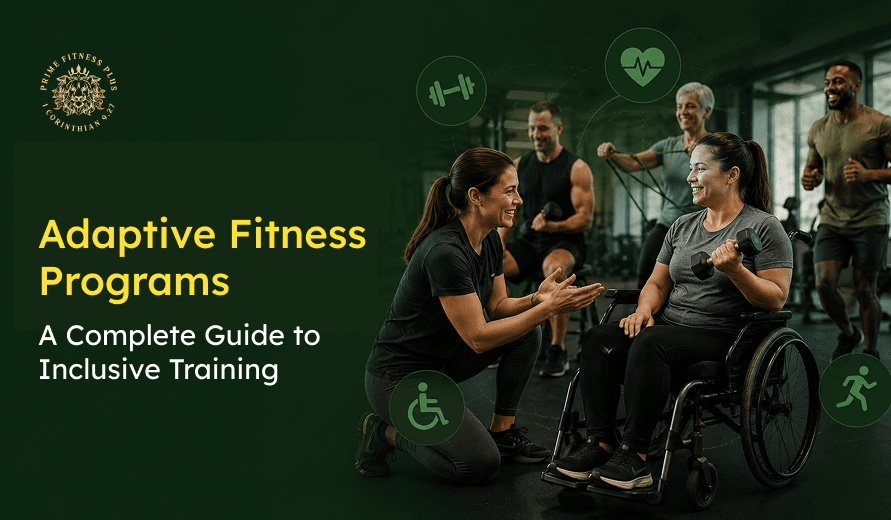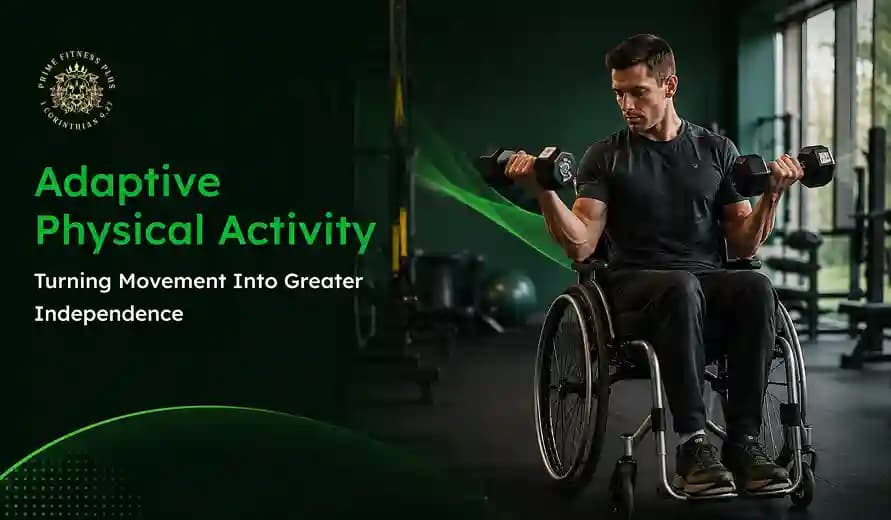
Adaptive Physical Activity offers people with disabilities practical ways to move, build strength, improve balance, and participate in daily activities with greater confidence. It can be tailored to a person’s mobility, strength, coordination, medical needs, equipment, and personal goals.
Physical activity need not look the same for everyone. A person who uses a wheelchair may focus on upper-body strength, seated balance, and transfers. Someone with limited leg movement may use supported standing exercises. A person with a neurological condition may focus on balance, coordination, walking practice, or controlled movement.
The goal is not simply to exercise. It is to make movement useful in everyday life. With the right activities and proper support, physical activity can help a person perform daily tasks, participate in community activities, and feel more confident moving through their surroundings.
What Is Adaptive Physical Activity?
Adaptive physical activity refers to exercise, recreation, sports, and movement activities that are modified to meet the needs of people with disabilities or physical limitations.
The activity may be modified in several ways. A trainer may adjust the body position, reduce the range of motion, use support equipment, change the speed of an exercise, or select a different movement that achieves the same goal.
For example, a standard squat may not be suitable for someone who has difficulty standing. A supported sit-to-stand exercise from a sturdy chair may be a more practical option. A traditional strength exercise may also be adapted into a seated movement for someone who cannot safely stand.
These changes allow more people to take part in physical activity without treating a single exercise plan as suitable for everyone.
How Adaptive Physical Activity Supports Independence
Independence often depends on physical abilities used throughout the day. Getting out of bed, transferring from a wheelchair to a chair, reaching for an item, carrying a light object, walking across a room, or maintaining an upright posture can all require strength and coordination.
Adaptive physical activity can focus on these real-life movements. This is also where functional fitness training can play a practical role, as exercises can be linked to movements people use at home, at work, and in the community.
1. Builds Strength for Daily Tasks
Strength plays a major role in everyday independence. Stronger muscles can make tasks such as pushing a wheelchair, standing from a chair, reaching overhead, or carrying personal items easier.
Adaptive strength exercises can target the arms, legs, core, back, and other muscle groups, tailored to a person's abilities.
For wheelchair users, upper-body exercises may support activities such as wheelchair propulsion and transfers. For people who can stand, lower-body exercises may focus on movements used for walking, standing, and changing positions.
2. Supports Balance and Body Control
Balance is important for both seated and standing movements. Poor balance can make everyday activities more difficult and may increase the risk of falls.
Adaptive exercises can include seated balance drills, supported standing, controlled weight shifts, reaching activities, and other movements that challenge body control at an appropriate level.
A person does not need to perform advanced exercises to improve balance. Simple movements, when performed with proper support, can play a useful role in a fitness program.
3. Helps With Mobility
Mobility includes more than walking. It can involve rolling in bed, moving from sitting to standing, transferring between surfaces, using a wheelchair, or moving the arms and upper body.
Adaptive physical activity can focus on the type of mobility that matters most to each individual.
Someone who walks with an assistive device may work on leg strength and controlled stepping. Someone who uses a wheelchair may focus on upper-body strength, trunk control, and transfer-related strength.
Examples of Adaptive Physical Activity
There is no single exercise routine that suits everyone with a disability. Activities should align with the person's abilities, goals, and safety needs.
Here are several examples:
Seated strength exercises:
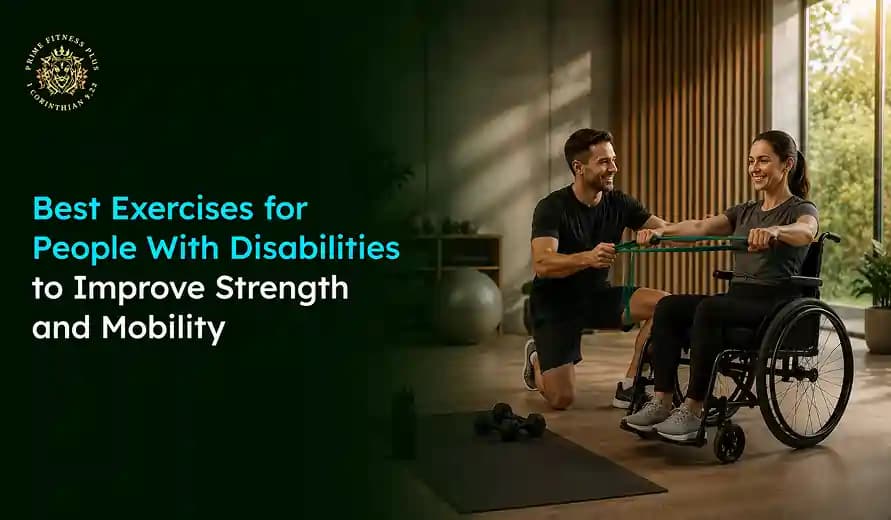
Chair-based exercises can include seated leg extensions, arm raises, resistance-band exercises, seated punches, and controlled trunk movements.
Supported standing exercises:
A stable support surface can be used during standing exercises for people who need balance assistance.
Walking activities:
People who can walk may work on controlled steps, changes in direction, short walking intervals, or movement using an approved assistive device.
Resistance training:
Resistance bands, light weights, machines, or bodyweight movements can be used based on a person's abilities.
Flexibility exercises:
Gentle stretching can support joint mobility and help maintain comfortable ranges of motion.
Cardiovascular activity:
Depending on ability, cardiovascular movement may include adapted cycling, seated cardio, walking, swimming, arm exercises, or other rhythmic activities.
Recreational activities:
Adaptive sports and recreational activities can add variety and promote social participation. Examples include wheelchair basketball, adaptive swimming, seated volleyball, hand cycling, and other modified sports.
Adaptive Physical Activity for Different Disabilities
People with different disabilities may have very different movement needs. A good program begins with the individual rather than with the diagnosis alone.
For people with spinal cord injuries, exercise may focus on upper-body strength, cardiovascular fitness, seated balance, flexibility, and transfer-related movements.
For people with cerebral palsy, activities may include strength training, balance practice, mobility exercises, coordination drills, and flexibility exercises tailored to individual needs.
For people with amputations, training may focus on strength, balance, mobility, core control, and confidence in using a prosthetic limb, when appropriate.
For people with multiple sclerosis, exercise plans may need to account for fatigue, temperature sensitivity, balance, strength, and energy levels.
For people with intellectual or developmental disabilities, clear instructions, familiar routines, visual demonstrations, and simple movement patterns may make exercise easier to follow.
For people with visual or hearing disabilities, communication and environmental changes can make physical activity more accessible.
The same diagnosis can affect two people very differently. That is why an exercise plan should be based on the person's current abilities and goals.
Adaptive Exercise Programs for Individual Needs
Adaptive exercise programs can be tailored to a person's mobility, strength, coordination, endurance, and daily goals. The program may include strength training, stretching, balance exercises, cardiovascular activity, or movement practice.
A person who has difficulty standing may begin with seated exercises. Someone with good upper-body strength but limited leg movement may focus more on upper-body resistance and cardiovascular activity.
The purpose is to select movements that are appropriate for the individual rather than expecting everyone to follow the same workout.
How to Build an Adaptive Exercise Routine
Starting an adaptive exercise program does not require complex equipment or a large fitness space.
Start With a Clear Goal
Think about what the person wants to improve. The goal might be to get stronger, improve transfers, walk for longer periods, maintain mobility, participate in recreation, or become more comfortable with everyday movement.
A clear goal helps determine which exercises deserve the most attention.
Choose Movements That Have a Daily Purpose
Exercises can be connected to real-life activities. For example, sit-to-stand practice can relate to getting out of a chair. Reaching exercises can relate to retrieving items from a shelf. Upper-body resistance training can relate to wheelchair use or transfers.
This approach can make exercise feel more meaningful.
Use Appropriate Support
Support may come from a chair, wall, rail, resistance band, an assistive device, or a trained professional. The type of support depends on the person's needs and the exercise being performed.
Safety should always come before adding difficulty.
Increase Activity Gradually
A person does not need to start with long workouts. Short periods of movement can be a reasonable starting point.
As strength, tolerance, or confidence changes, the duration, repetitions, resistance, or movement difficulty can be adjusted accordingly.
Pay Attention to the Body
Pain, unusual dizziness, breathing difficulties, severe fatigue, or other concerning symptoms should not be ignored. People with medical conditions or significant physical limitations should consult an appropriate healthcare professional before starting a new exercise routine, if needed.
The Role of Adaptive Fitness Training
Adaptive fitness training can provide structured support for people who need modifications to traditional exercises. A qualified fitness professional can select movements based on ability, available equipment, mobility needs, and personal goals.
For example, a trainer may modify a resistance exercise for someone with limited hand movement or adapt a standing activity to a seated version. The focus remains on helping the individual participate in physical activity in a safe and practical way.
This type of training can also help families and caregivers understand how specific exercises relate to everyday movement.
Why Professional Guidance Can Help
Adaptive fitness professionals can help identify suitable exercises, equipment, movement patterns, and progressions. They can also help make workouts easier to follow and more relevant to everyday goals.
For someone who has never exercised regularly, professional guidance can provide a clear starting point. It can also be useful for people who have tried traditional fitness programs but found the exercises did not suit their abilities.
A qualified professional should understand accessibility, movement limitations, exercise safety, and the need to adjust activities to the individual.
For families and caregivers, professional guidance can also offer ideas for supporting physical activity beyond formal training sessions.
Making Fitness More Accessible
Accessibility is about more than an accessible entrance. A fitness environment should also consider equipment, floor space, communication, exercise instructions, seating, rest areas, and the needs of people with different disabilities.
Inclusive fitness programs should allow people to participate without feeling they must conform to a standard exercise model.
This can include seated exercise options, accessible equipment, clear instructions, adjustable resistance, appropriate rest periods, and staff trained in these practices.
When fitness programs are designed with diverse abilities in mind, more people can participate in regular movement.
Disability Fitness Programs and Everyday Movement
Disability fitness programs can focus on the physical abilities that matter most in daily life. Depending on the person, these may include strength, balance, mobility, endurance, flexibility, coordination, or transfer skills.
The greatest value of exercise may be seen outside the workout itself.
A stronger upper body may improve wheelchair mobility. Better balance may make standing tasks easier. Improved leg strength may support walking or transfers. Better body control may make reaching, dressing, bathing, or moving between surfaces easier.
Progress does not always mean lifting heavier weights or exercising for longer. Sometimes it means completing a daily task with less assistance, moving with greater control, or feeling more comfortable participating in an activity.
These small changes can have a meaningful effect on daily life.
Personalized Fitness Programs for Long-Term Goals
Personalized fitness programs can give each person a routine based on their current abilities and specific goals. The program may change over time as strength, mobility, endurance, or confidence changes.
For one person, the main goal may be to improve wheelchair mobility. For another, it may be to stand for longer periods or to take part in an adaptive sport. A personalised approach allows the exercise plan to focus on the areas that matter most to the individual.
Consistency is also important. Regular movement, when appropriate for the person, can help maintain physical abilities and support an active lifestyle.
Final Thoughts
Adaptive Physical Activity focuses on moving work for the person, rather than expecting the person to fit a standard workout. It can support strength, balance, mobility, confidence, and the physical abilities used in everyday life.
The most useful program is one that considers individual needs and focuses on practical goals. Whether the goal is to move around the home, use a wheelchair, improve transfers, participate in sports, or become more active, the right exercise approach can make physical activity a meaningful part of daily life.
Greater independence often develops through small, consistent improvements. Every safe movement can support a person's ability to participate, move, and live more actively.