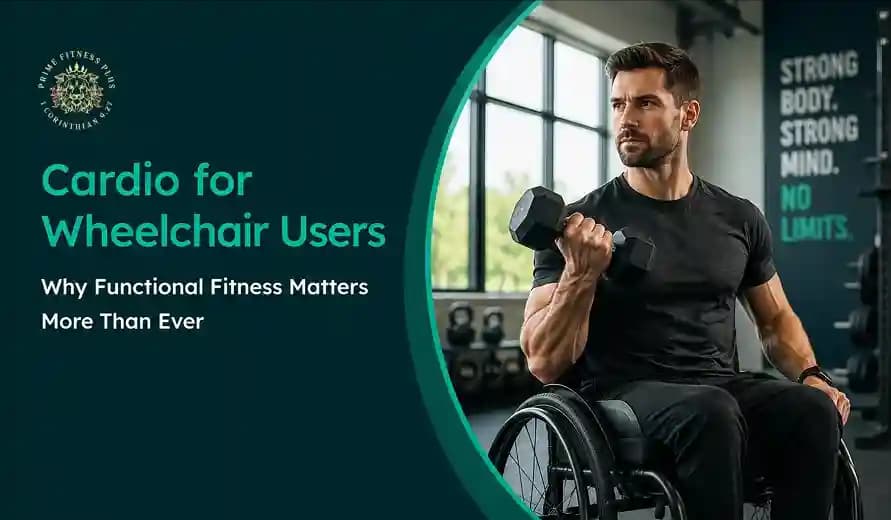
Staying active is important for everyone, and cardio for wheelchair users plays a major role in supporting heart health, muscle endurance, and everyday movement. Regular physical activity is not only about burning calories. It also helps people complete daily tasks more easily, maintain independence, and support mental well-being. Whether someone uses a wheelchair because of a spinal cord injury, multiple sclerosis, cerebral palsy, muscular dystrophy, or another condition, movement can still be part of a healthy lifestyle.
Many people think cardio means running or cycling, but that is only one way to improve heart health. For wheelchair users, many practical options suit different mobility levels and fitness goals. When cardio is combined with movements that support balance, strength, posture, and daily activities, it becomes a meaningful part of long-term health.
Cardio for Wheelchair Users: More Than Heart Health
Cardio training raises the heart rate for a period of time, helping the heart and lungs work together more efficiently. For wheelchair users, regular cardio can also strengthen arm muscles, improve circulation, boost stamina, and increase confidence in daily routines.
Many daily activities already require upper-body strength. Pushing a wheelchair, transferring from a wheelchair to a bed or vehicle, carrying groceries, and reaching for items on a shelf all depend on muscle endurance. Cardio training supports these movements by helping the body sustain effort longer without tiring as quickly.
People often focus only on how long they exercise, but the quality of movement matters just as much. Safe movement patterns help reduce unnecessary strain on the shoulders, elbows, wrists, and neck, which are used throughout the day.
Functional fitness connects exercise to real-life tasks. Instead of training only for appearance, the goal is to make daily life easier and more comfortable.
Why Functional Fitness Matters
Functional fitness focuses on movements people use every day. Rather than isolating one muscle at a time, it trains multiple muscle groups together.
For wheelchair users, functional fitness may include:
- Reaching overhead safely
- Pushing and pulling with better control
- Rotating the upper body
- Maintaining an upright posture
- Moving between different surfaces
- Carrying household items
- Building grip strength
These movements support independence at home, work, school, and in the community.
A person with better upper-body endurance may notice that longer trips, shopping, cooking, or participating in community events feel less tiring. Functional movement focuses on making everyday activities smoother rather than on gym performance alone.
Cardio for Wheelchair Users and Everyday Independence
Daily life requires repeated movement. Every push of the wheelchair, every transfer, and every reach places demands on the upper body.
Cardio sessions that incorporate practical movement patterns help prepare the body for these demands. Improved endurance may support:
- Longer community outings
- Greater comfort during travel
- Better participation in family activities
- Improved energy throughout the day
- More confidence during recreation
Consistency matters more than intensity. Even brief sessions, done several times a week, can improve overall fitness.
It is also important to allow adequate recovery time between sessions, especially for beginners or those returning after a long break.
Wheelchair Cardio Exercises That Support Daily Movement
Many people picture complex gym routines, but wheelchair cardio exercises can be simple and practical.
Some common options include:
Arm Cycling
An upper-body cycle helps users maintain a steady pace while working the shoulders, arms, chest, and back. Resistance can be adjusted to suit individual ability.
Wheelchair Propulsion Intervals
Moving at varying speeds on a safe, flat surface can raise the heart rate and build endurance. Short bursts of faster pushing, followed by slower recovery periods, add variety without making the session overly strenuous.
Resistance Band Cardio
Continuous pulling movements with resistance bands can keep the body moving while strengthening multiple upper-body muscles.
Shadow Boxing
Punching combinations performed while seated help increase heart rate and improve coordination and shoulder endurance.
Medicine Ball Passing
Throwing or passing a light medicine ball with a partner introduces movement in different directions while building arm strength and coordination.
These activities can be adjusted based on individual mobility, strength, and medical advice.
Building a Chair Cardio Workout That Fits Your Ability
A chair-based cardio workout does not require expensive equipment or a large gym. Many people start with simple routines at home or at a community fitness centre.
A beginner session may include:
- Five minutes of gentle arm circles and shoulder rolls.
- Three minutes of steady wheelchair propulsion or arm cycling.
- One minute of faster movement.
- Two minutes of slower recovery.
- Repeat the cycle three or four times.
- Finish with stretching for the shoulders, chest, neck, and wrists.
As fitness improves, the duration of each work period can gradually increase while recovery periods shorten.
Keeping good posture throughout the workout also helps reduce unnecessary stress on the joints.
Common Challenges and Ways to Manage Them
Wheelchair users often face barriers unrelated to motivation.
Some common challenges include:
Shoulder Fatigue
The shoulders perform much of the daily work for wheelchair users. Overtraining without adequate recovery can cause discomfort. Alternating workout types and allowing rest days helps manage this.
Limited Access to Fitness Centres
Not every gym has equipment designed for wheelchair users. Home-based routines using resistance bands, arm ergometers, or bodyweight exercises can still deliver effective cardio sessions.
Fear of Injury
Starting slowly and focusing on proper movement patterns reduces unnecessary strain. Working with a qualified trainer experienced in adaptive fitness can also provide added confidence.
Staying Consistent
Busy schedules, transportation issues, and health conditions can disrupt exercise routines. Setting realistic weekly goals often works better than aiming for long daily workouts.
Choosing a Wheelchair Exercise Program
A structured wheelchair exercise programme should align with a person's current fitness level, medical history, and personal goals.
Rather than copying someone else's routine, it is helpful to consider:
- Current mobility
- Shoulder health
- Available equipment
- Daily schedule
- Personal interests
- Medical recommendations
Some people enjoy group classes for the encouragement and social interaction they provide. Others prefer individual sessions at home, where they can exercise at their own pace.
The best program is one that can be followed consistently over time while supporting safe movement and steady progress.
Adaptive Cardio Exercises for Different Ability Levels
No two people have the same mobility, strength, or health needs. That is why adaptive cardio exercises accommodate different abilities rather than following a single standard routine. Small adjustments can make a workout safer and more comfortable while keeping the heart and muscles active.
Examples include:
Beginner Level
- Slow wheelchair propulsion on a smooth surface
- Arm circles with controlled breathing
- Light resistance band punches
- Seated marching with arm movements
Intermediate Level
- Interval pushing with short recovery periods
- Continuous arm cycling
- Medicine ball passes with a partner
- Seated boxing combinations
Advanced Level
- Circuit training using several stations
- Battle rope intervals while seated
- Resistance band speed drills
- Timed endurance sessions with upper-body equipment
The goal is not to compare one person with another. Progress comes from staying active in a way that suits individual abilities and health conditions.
Functional Fitness for Wheelchair Users in Daily Life
Functional fitness for wheelchair users focuses on preparing the body for everyday activities rather than merely completing workouts. Daily living often requires repeated pushing, reaching, lifting, turning, and transferring. Training these movements can make common tasks easier.
Examples include:
- Reaching into kitchen cabinets
- Loading a wheelchair into a vehicle
- Carrying shopping bags
- Moving between a wheelchair and a bed
- Playing with children or grandchildren
- Taking part in community events
When cardio and functional movement work together, people often notice that everyday routines require less effort over time.
Simple movement patterns, when practised consistently, usually yield better long-term results than occasional intense workouts.
Safety Tips Before Starting Exercise
Every fitness journey should begin with safety in mind. Before starting a new routine, consult a healthcare provider or rehabilitation professional, especially after surgery, an injury, or a recent medical diagnosis.
Other helpful safety tips include:
- Warm up for at least five to ten minutes.
- Check wheelchair brakes before stationary movements.
- Wear comfortable clothing that allows free movement.
- Stay hydrated before, during, and after exercise.
- Stop if you notice dizziness, chest pain, or unusual discomfort.
- Allow enough recovery between workout days.
- Focus on smooth, controlled movement instead of rushing.
People who use assistive devices or have limited arm mobility may also benefit from working with a certified adaptive fitness professional.
Making Exercise Part of Your Weekly Routine
Many people believe they need long workouts several days a week to stay healthy. In reality, consistency matters far more than perfection.
A simple weekly schedule may look like this:
Monday
Cardio session with upper-body intervals
Tuesday
Light stretching and mobility work
Wednesday
Strength training for the upper body
Thursday
Rest or gentle movement
Friday
Mixed cardio and functional movement practice
Saturday
Outdoor wheelchair activity or recreational sport
Sunday
Recovery and flexibility exercises
This type of schedule gives the body time to recover while keeping movement a part of daily life.
Exercise for Wheelchair Users at Home
Not everyone has access to a fitness centre, but that should not prevent anyone from staying active. Wheelchair users can exercise at home using simple equipment or even their body weight.
Home workout ideas include:
- Resistance band rows
- Seated punches
- Arm raises
- Shoulder presses with light dumbbells
- Balloon volleyball
- Chair-based movement circuits
A small workout area and a regular schedule are often enough to support steady progress.
Keeping workouts enjoyable also helps people stay committed over time. Listening to music, joining virtual fitness classes, or exercising with family members can make workouts more enjoyable.
Building Healthy Habits That Last
Long-term success rarely comes from a single workout or a month of training. Healthy habits develop through consistent practice and realistic goals.
Helpful strategies include:
- Keeping a workout calendar
- Tracking improvements in endurance
- Celebrating small milestones
- Adjusting workouts as fitness improves
- Resting when the body needs recovery
Some days may feel easier than others, and that is completely normal. The important thing is to return to the routine without feeling discouraged after missing a workout.
Support from family members, caregivers, trainers, or local adaptive fitness organisations can also help make it easier to stay active.
Final Words
Making time for cardio for wheelchair users is about much more than raising the heart rate. Regular movement supports independence, stamina, confidence, and the ability to handle everyday activities with greater ease. When cardio is combined with strength, mobility, and practical movement patterns, it becomes part of a healthier lifestyle rather than just another workout. Choosing activities that match personal abilities, following a consistent routine, and focusing on safe movement can help wheelchair users stay active and continue doing what matters most.