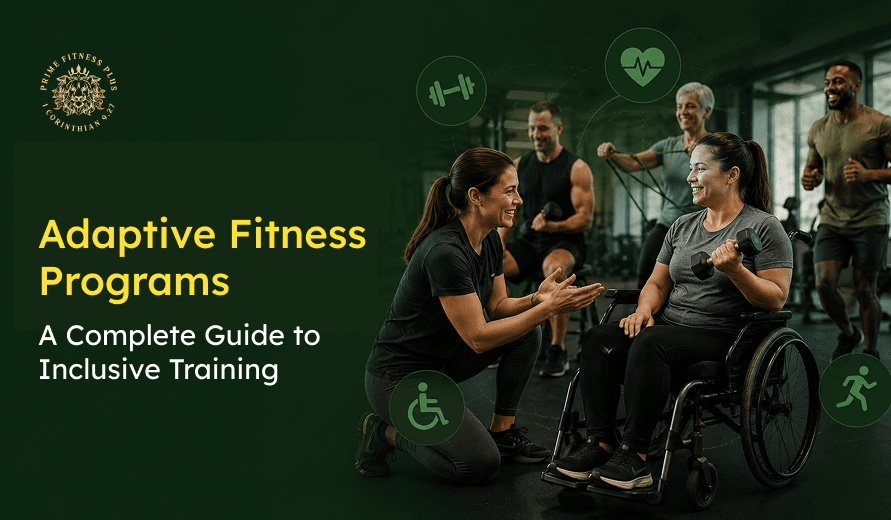
Strength isn't off-limits just because someone uses a wheelchair, has limited mobility, lives with a neurological condition, has a limb difference, or needs extra support to move. Strength training for people with disabilities can absolutely be safe and effective — the key is tailoring exercises to a person's abilities, goals, balance, coordination, and physical needs, rather than forcing them into a standard template.
This isn't about chasing heavy lifts or following a generic gym program. Resistance bands, light dumbbells, machines, bodyweight exercises, seated exercises, or supported movements can all work — the right starting point depends on what a person can do comfortably and safely right now.
Why Strength Training Matters for People With Disabilities
Muscle strength quietly underpins much of everyday life. Stronger muscles make it easier to transfer from a wheelchair to a bed, stand up from a chair, carry things, or simply get around the house. For many people, strength training for people with disabilities isn't just about muscle — it's about preserving physical function and staying part of daily movement, full stop.
For someone with limited mobility, the training usually focuses on the muscles and movements that matter most for their specific situation. Someone with solid upper-body control might use dumbbells or bands; someone else might need seated exercises with built-in extra support.
Beyond muscle, this kind of training can support bone health, balance, joint mobility, and overall independence. But it's worth repeating: what works beautifully for one person might be entirely inappropriate for someone with a different disability, injury history, range of motion, or balance level.
The real goal isn't picking the "best" workout — it's finding movements that fit the individual, rather than expecting everyone to do the same thing.
What to Think Through Before Starting
A few things are worth working out before jumping into a new program.
Current physical ability. Start from where the person actually is — strength, range of motion, balance, coordination, grip, endurance, and how well they can control different movements. Nobody needs to be strong to start; the starting line just has to match where they're standing.
Medical considerations. Health conditions, recent surgeries, injuries, or joint issues can all shape which exercises make sense. When any of that's in play, it's worth checking in with a healthcare professional before starting, just to flag what should be avoided or modified.
Pain and comfort. Exercise isn't something to push through when it hurts. Some mild fatigue is a normal part of building strength, but sharp, sudden, or unfamiliar pain is a different matter and shouldn't be brushed off. A good trainer knows when to reduce resistance, switch the movement, stop altogether, or recommend seeking medical advice.
Equipment and environment. The training space needs enough room to move safely and to accommodate any equipment. Wheelchair users need room to position themselves properly; anyone with balance concerns may need a stable chair, a support rail, or another form of steady assistance nearby.
Which Exercises Actually Work for Different Abilities?
There's no single list that fits everyone — exercises are chosen based on what a person can actually do and what they're trying to achieve.
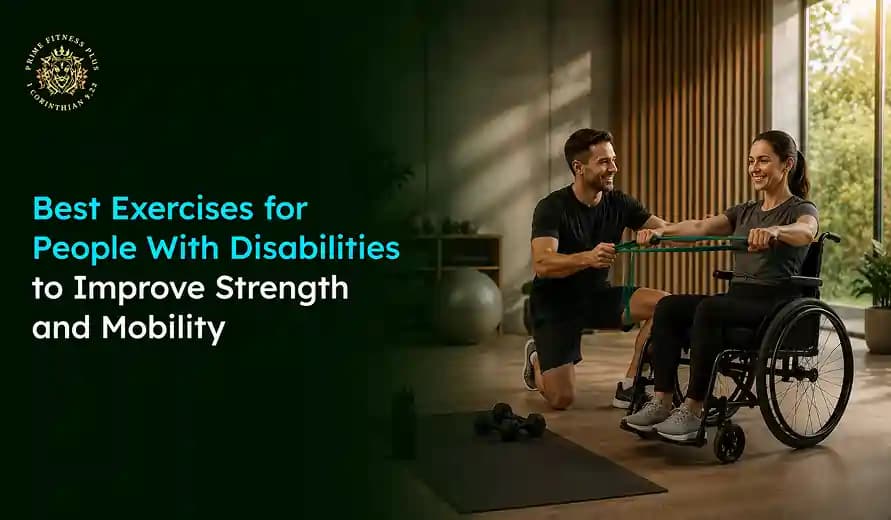
Seated strength exercises. Useful for anyone who can't safely stand for exercise or needs more stability. Think seated chest presses, seated rows, seated bicep curls, seated shoulder presses, resistance-band pulls, seated overhead reaches, and seated core work — all doable with bands, light dumbbells, cable machines, or similar equipment.
Resistance band exercises. Bands are genuinely versatile — available in different resistance levels and a wide range of movements. They work well for chest presses, rows, arm curls, tricep extensions, shoulder work, and leg or hip exercises. The band needs to be anchored securely, and the person needs enough control to let it return slowly rather than snapping back.
Bodyweight exercises. These don't always mean lifting your entire body weight — they can be adapted to ability. A chair sit-to-stand works for someone who can stand with support. A wall push-up suits someone who can stand safely on their own. A seated leg extension might be a better fit for someone who can't do standing work at all. Often, the same basic movement can be adjusted to become accessible.
Functional strength exercises. These rely on movements pulled straight from daily life — standing from a chair, reaching for something, carrying a light object, pulling a band, pushing something, moving from sitting to standing, and holding an upright seated position. This is where strength training and real daily activity actually connect.
How Adaptive Strength Training Fits In
Adaptive strength training takes traditional resistance work and reshapes it to fit a person's actual movement abilities — adjusting body position, equipment, resistance, range of motion, or the level of assistance.
A standing exercise might become a seated one. A heavy dumbbell might be swapped for a lighter weight or a band. A full-range-of-motion movement might be trimmed to a smaller, more comfortable range. This kind of flexibility makes it possible to keep working toward specific movement goals without ignoring real physical limitations.
How Much Weight Should Someone Actually Use?
It depends entirely on the person and the exercise — there's no universal number.
Someone just starting out should probably begin with very light resistance, focusing squarely on controlled movement and clean technique rather than on how much weight is being moved. A good rule of thumb: if the final few reps feel genuinely difficult but form still holds, the resistance is probably about right.
If someone's holding their breath, swinging to force the rep, compensating with an unrelated body part, or losing control of the equipment altogether — that's the signal that the resistance is too high.
How Often Should Training Happen?
Frequency depends on the person's goals, schedule, recovery ability, and overall condition. Many adults can train strength several days a week, as long as there's recovery time built in between sessions that target the same muscle groups.
Someone new to exercise might start with shorter sessions and fewer movements, then gradually increase repetitions, sets, resistance, or variety as tolerance improves. There's genuinely no need to rush. A steady, manageable routine tends to beat one brutal workout that leaves someone unable to move for days afterwards.
Modifying Exercises for Different Abilities
Modification is arguably the heart of adaptive fitness. Nearly any movement can be adjusted by altering:
- Body position
- Range of motion
- Resistance
- Number of repetitions
- Exercise speed
- Rest time
- Equipment
- Amount of support
- Exercise duration
A standing move becomes seated. A heavy dumbbell becomes a lighter weight or a band. A full range is trimmed to something comfortable. These small shifts let someone build real strength without needing to perform a movement exactly as anyone else in the room does.
What Does a Safe Workout Actually Look Like?
A safe session generally has a clear shape from start to finish.
1. Warm up. Gentle movement to prepare the body — shoulder rolls, arm circles, easy marching, seated movement, whatever fits the person.
2. Do strength work. A handful of exercises targeting different muscle groups, using resistance that allows controlled movement, with rest built in as needed.
3. Watch how the body responds. Keep an eye out for pain, dizziness, unusual shortness of breath, weakness, or anything else that feels off. If anything seems wrong, stop and reassess before continuing.
4. Cool down. Wind things down with gentle movement, letting the body settle back to a resting state.
Which Exercises Suit People With Disabilities?
Strength exercises for people with disabilities can target the arms, legs, back, chest, shoulders, and core — which specific exercises depend on what the person can do and what they're working toward.
Seated rows target the back and arms; seated chest presses work the chest and upper body; supported sit-to-stand movements build leg strength for anyone able to stand with assistance. None of this needs to be complicated — simple movements with the right resistance are a solid starting point.
Common Mistakes Worth Avoiding
A few pitfalls show up again and again:
- Rushing in. Too much too soon leads to excess fatigue or injury.
- Overloading resistance. Heavy weight isn't required to build real strength — technique matters more.
- Ignoring pain. It's not something to just push through.
- Copying someone else's routine. What works for one person may be entirely wrong for another.
- Skipping rest. Recovery is part of the training, not a break from it.
- Chasing appearance only. Strength training can serve real goals — better transfers, posture, movement, endurance, independence.
How Accessible Strength Training Helps Beginners
Accessible strength training is about making resistance training genuinely practical for people facing physical or environmental barriers — seated equipment, resistance bands, adjustable weights, stable support, clear instructions, and enough room for mobility equipment all play a part.
A beginner might start with just two or three exercises and a small number of reps, then gradually adjust resistance or volume as things become more comfortable. The aim is simply a routine that can be done safely and maintained consistently.
When an Adaptive Personal Trainer Can Help
An adaptive personal trainer can modify exercises to match someone's abilities and goals — especially valuable for people unsure where to start, dealing with limited mobility, using adaptive equipment, or needing significant changes to standard exercises.
A good trainer observes how someone moves, selects appropriate exercises, demonstrates proper technique, adjusts resistance, and adapts the plan as the person progresses. Disability should never be treated as a reason to skip exercise — a good program respects individual ability instead.
At Prime Fitness Plus, adaptive fitness is built around exactly this — an accessible approach to strength and movement training for people with different physical needs, focused on practical movement, real strength, mobility, and confidence in exercise.
How Beginners Can Progress Safely
Progress doesn't have to mean piling on more weight. It can look like:
- One or two extra reps
- An added set
- Slightly more resistance
- More time under exercise
- Better movement control
- A wider comfortable range of motion
- Less reliance on assistance
- Cleaner posture during the movement
Usually one change at a time is enough. If someone can comfortably knock out 8 reps with a band, the next step might be working toward 10 before moving to a stronger band. Small, incremental shifts make it much easier to see how the body's actually responding.
Fitting Adaptive Fitness Into Everyday Life
Adaptive fitness exercises work best when they're built around activities a person already deals with day to day. Someone working on transfers might focus on supported sit-to-stand practice. Someone who wheels themselves around might prioritize upper-body strength. Someone struggling with posture might focus on seated core and back work.
This keeps the exercise tied to something concrete rather than just being gym movement for its own sake. And the routine itself can flex with energy levels — fewer reps, lighter resistance, or more built-in rest on the tougher days.
What Counts as Safe Exercise for People With Disabilities?
Safe exercises for people with disabilities depend on the individual — their abilities, health background, balance, movement control, and exercise history. Seated resistance work, controlled band exercises, supported standing movements, and light functional exercises can be appropriate for some people, though never automatically for everyone.
Anyone experiencing significant pain, dizziness, unusual breathing difficulty, or another concerning symptom should stop and seek proper medical guidance rather than push through.
Adjusting Strength Training for Limited Mobility
Strength training for limited mobility works within whatever range of motion or movement capacity a person has. Seated rows might replace a standing pulling exercise. A band might stand in when a machine isn't accessible. A lighter weight might allow better control when grip strength is limited.
The goal throughout is to work within someone's current ability while gradually expanding what that ability looks like.
Staying Consistent
The best routine is the one someone can actually stick to. That means choosing activities that fit their schedule, abilities, interests, and available equipment — and setting realistic goals instead of expecting dramatic change overnight.
Keeping a simple record helps too — exercise, resistance level, reps, and how the session felt. Small wins count as real progress: an extra rep, less assistance needed, better posture, and more control over a movement.
Final Words
Strength training for people with disabilities can be both safe and genuinely effective when it's tailored to individual abilities, goals, and physical needs. Seated exercises, resistance bands, bodyweight movements, light weights, machines, and functional exercises all have a place in a well-designed adaptive fitness program.
Safety comes down to manageable resistance, real control, proper rest, attention to warning signs, and gradual progression. Nobody has to follow the same workout as the person next to them to build real strength.
For anyone unsure where to begin, working with an adaptive personal trainer can provide the structure and support needed to build a routine that truly fits their movement needs.