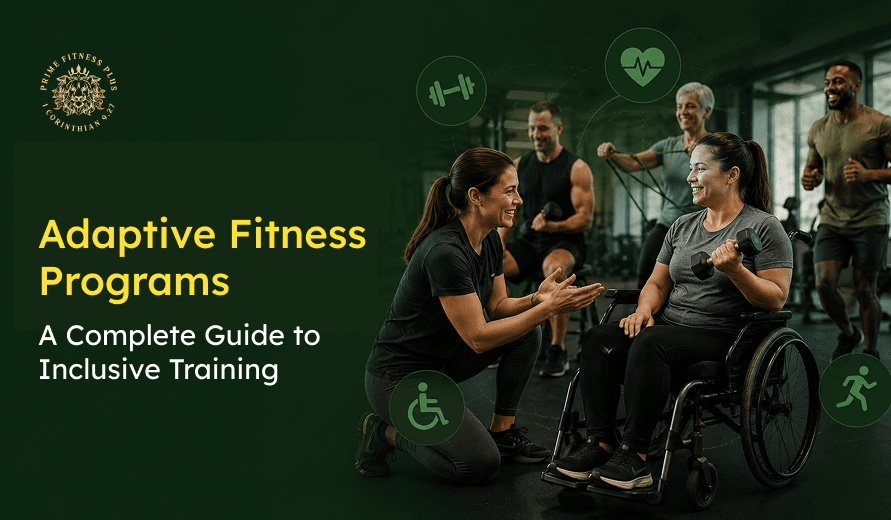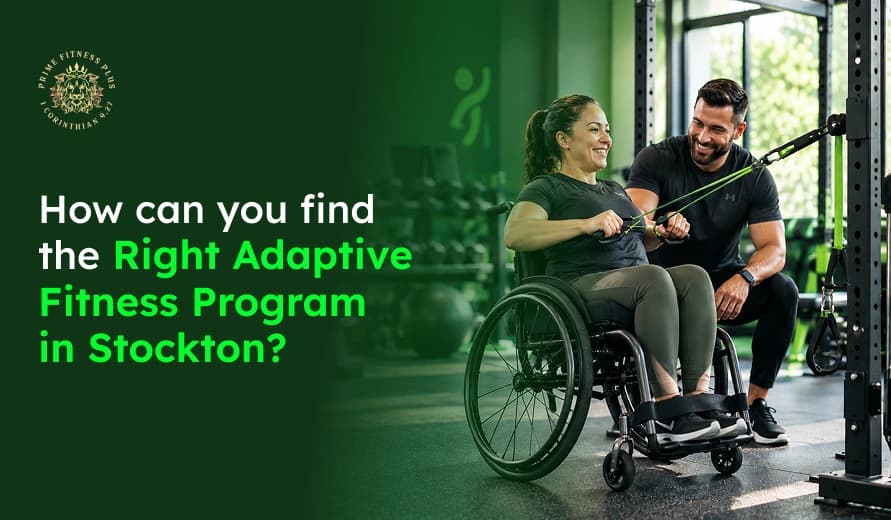
Most gyms are built for one kind of body. If you use a wheelchair, struggle with balance, live with a neurological condition, or are returning to training after an injury, a low price and a close location won't tell you much. So, how do you find adaptive fitness in Stockton? Look for a place that starts with what your body can do right now, offers exercises that suit you, and doesn't make you feel out of place.
Stockton has more to offer than people expect. There are adaptive sports, community programs for people with disabilities, city recreation, and private coaches. Delta Sculling Centre runs OarBusters, an adaptive sports program open to people with physical, neurological, sensory, and other limitations.
Below are the key factors to consider when comparing options for adaptive fitness in Stockton.
1. Get Clear on What You Need
Before you contact anyone, clarify what you want from exercise. Maybe you use a wheelchair or walk with difficulty. Maybe the issue is balance, weakness, or a limited range of motion. Some people are recovering from surgery, some have a chronic or neurological condition, and some need to train seated or with a carer nearby.
Then think about the goal. Strength, stamina, steadier balance, easier everyday movement, or simply moving more. A good program builds on your current abilities and doesn't hand you a generic routine. That's the real difference between an ordinary gym and fitness programs for people with disabilities, because no two people need the same thing.
Returning after surgery, an injury, or a long period of inactivity? Talk to your doctor first about what's appropriate.
2. Ask About the Trainer's Experience
A general personal trainer and an adaptive trainer work with very different situations. When you're looking at adaptive fitness in Stockton, ask them directly. Have they worked with wheelchair users or people with neurological conditions? Can the session be done seated? What do they change when a movement hurts? How do they track fatigue? And what happens on a day when your mobility is worse than usual?
Their answers tell you a lot. Someone experienced gives specific examples, while someone who isn't tends to stay vague.
Prime Fitness Plus in Stockton builds its services around adaptive training, accessible fitness, strength, mobility, and recovery. Its website says its approach takes into account medical history, functional capacity, and neurological factors.
3. See the Facility in Person
A place can look accessible online and still be a hassle in person. Check the entrances, restrooms, and parking. Look at whether the pathways are wide and whether there's room between machines. Find out whether the equipment adjusts or can be used from a wheelchair, and whether there's somewhere to sit and rest.
Getting through the front door is only the start. You need to move freely throughout the workout area. Prime Fitness Plus says its Stockton facility has wide pathways, wheelchair-friendly equipment, adjustable stations, and calm spaces for people with mobility challenges.
If you can, go before you sign anything. A ten-minute walk-through answers what photos can't.
4. Ask How Exercises Get Modified
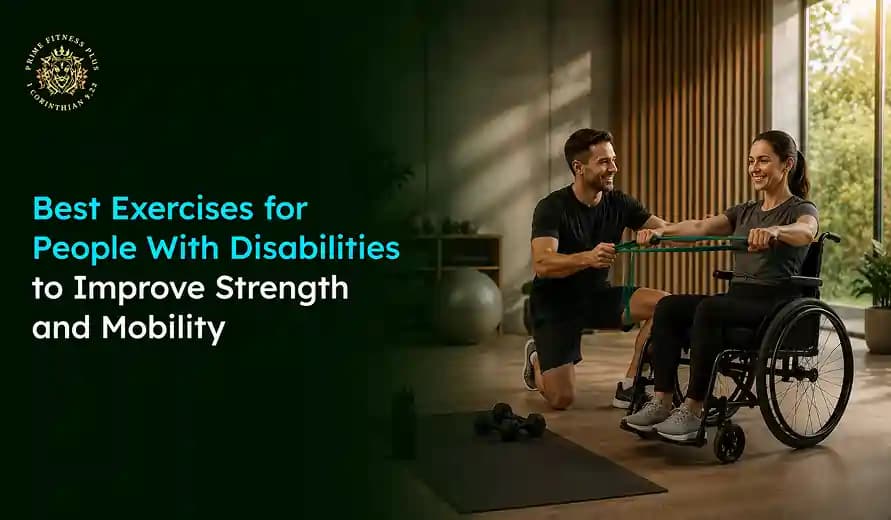
Adaptive doesn't mean a completely different workout. Usually, it's the same goal reached another way. If a standing squat isn't safe for you, a supported or seated version can do the job. If your upper-body movement is limited, there are other ways to train with resistance.
This is where adaptive strength training earns its place. Ask how the trainer adapts resistance training, cardio, balance drills, stretching, core work, and everyday movements. You want exercises that fit your body and still move you towards your goal.
5. Put Safety First
When you're evaluating safe exercises for people with disabilities, ask how the trainer addresses fatigue, pain, balance issues, and progression. A good program won't push you through a move just because it's on the standard plan.
You should feel free to speak up if something hurts, you're worn out, you feel unsteady, or you need a break or a change. The trainer should explain each exercise before you try it.
If you have a medical condition, your healthcare provider may need to weigh in. Stockton also offers medical services for people with physical limitations. San Joaquin County's California Children's Services Medical Therapy Program serves eligible children and young adults with conditions such as cerebral palsy, spinal cord injuries, spina bifida, and muscular dystrophy.
6. One-on-One or Group?
Adaptive personal training usually suits people who need frequent changes to their exercises, want close supervision, have very specific goals, are recovering from an injury, or simply dislike big gyms.
Small groups can be great if you like company and can keep up safely. Either way, ask how many people are in a session and how much attention each person receives.
7. Don't Limit Yourself to Gyms
Adaptive fitness doesn't always happen in a gym. Delta Sculling Centre at RiverPoint Landing Marina & Resort offers OarBusters for people with physical disabilities, neurological conditions, sensory challenges, and brain injuries. They use adapted boats and land-rowing equipment.
There are community options as well. Stockton's Get FIT program is a health and wellness initiative for participants with disabilities. Its published information mentions exercise and nutrition sessions and a medical clearance requirement.
Programs like these are a good reason to look beyond standard memberships when searching for accessible fitness programs in Stockton.
8. Compare Cost, Schedule, and Location
Even a great program is useless if you can't keep showing up. Ask about membership and session fees, session length, cancellation policies, available times, parking and transportation, equipment fees, and whether a trial session is offered. Prices and requirements change, so confirm everything directly with the provider.
Be realistic about how often you can attend. A practical schedule and an easy trip matter more than most people realise.
9. Pay Attention to How They Talk to You
In that first conversation, notice whether the trainer actually listens. They should ask about your abilities and goals. You should be able to share what's hard, what you enjoy, what equipment you can use, and what makes you uncomfortable. They should also explain what a session will look like. Feeling respected is a major reason people stick with a program.
10. Know the Red Flags
Walk away, or at least be careful, if a program uses the same routine for everyone, brushes off your movement concerns, or pushes you into painful moves. The same goes if they can't explain their modifications, lack accessible equipment, can't describe their experience with disability fitness, promise medical results, or remain vague about pricing and safety.
Exercise coaching isn't medical care. If your needs are complex, ask whether the trainer will coordinate with your healthcare team or whether the trainer wants medical clearance first.
A Quick Checklist for Choosing Adaptive Fitness in Stockton
- Do they understand my needs? You should be at ease talking about your mobility, fitness level, and goals.
- Can exercises change? Look for someone who adjusts to how you feel that day.
- Is the space accessible? Entrances, pathways, equipment, restrooms, parking.
- Is safety taken seriously? You should know how pain, fatigue, and balance issues are handled.
- Do the schedule and cost work? Get every fee spelled out before you commit.
- Do I feel comfortable? You'll be spending a lot of time with this person.
How to Find Adaptive Fitness in Stockton: Start With Your Needs
The program should fit you, not the other way around. First, identify your movement needs and goals. Then compare trainers, accessibility, modifications, safety practices, session formats, costs, and schedules. Private coaching, community recreation, and adaptive sports are all worth considering.
If you're still wondering how to find adaptive fitness in Stockton, take your time and ask plenty of questions before you commit. A brief conversation or a visit will quickly show whether the trainer, equipment, and environment suit you.
If you want structured support for strength, mobility, recovery, or accessible exercise, Prime Fitness Plus offers adaptive fitness services in Stockton, with training tailored to each person's abilities and goals.
Final Words
Know what you need, ask direct questions, and choose a place that takes your abilities and goals seriously. The right adaptive fitness option in Stockton offers exercises tailored to your body, clear communication, an accessible space, and support in every session.