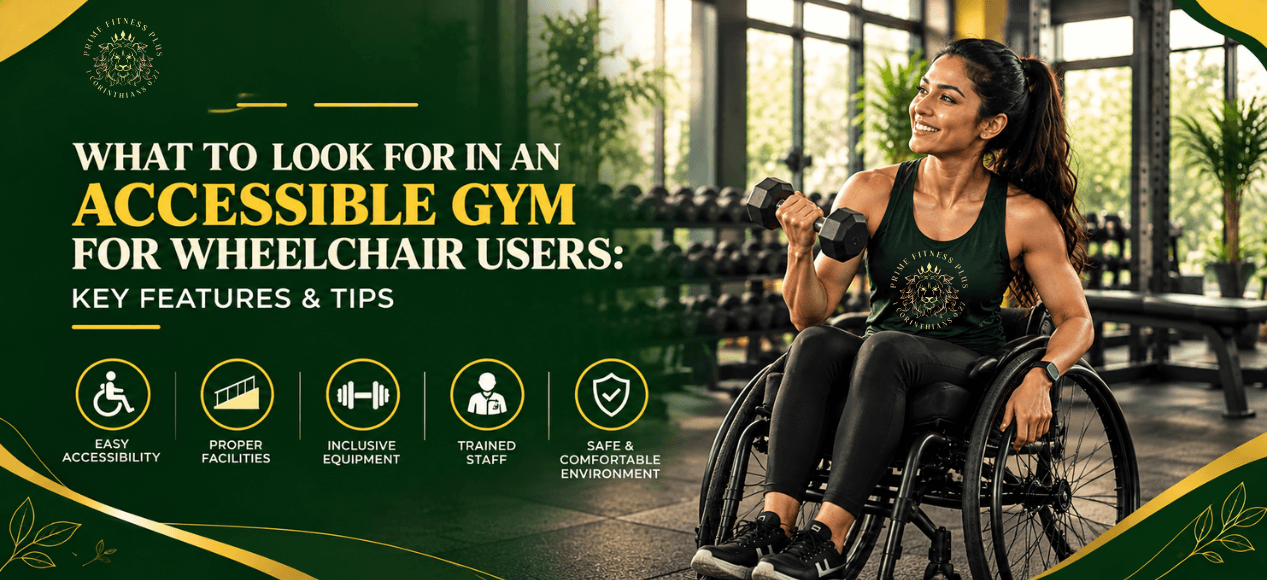
Finding a gym is easy. Finding one that works for you is harder. Many gyms advertise themselves as “accessible” because they have a ramp at the front door. That is a start, but it doesn’t tell you whether you can reach the equipment, move between machines, or get help from staff who know what they’re doing.
This guide gives you a practical way to judge a gym before you pay for a membership. You’ll learn what to check, what to ask, and which warning signs to watch for.
What “Accessible” Really Means in a Gym
Accessibility is more than getting through the door. A truly accessible gym lets you arrive, move around, use the equipment, and leave comfortably, without needing workarounds at every step.
Think of it in four parts:
- Getting in: parking, entrance, doors, and the route inside
- Getting around: space between equipment, flooring, and restrooms
- Getting a workout: equipment you can actually use
- Getting support: staff who understand adaptive training
A gym can do well in one area and fail in another, so check all four.
Step 1: Check Arrival and Entry
Start before you walk in. Ask yourself:
- Are there accessible parking spaces close to the entrance, with room to unload a ramp or lift?
- Is the entrance step-free, with a gentle ramp or level approach?
- Do the doors open easily? Automatic or push-button doors are ideal. Heavy manual doors can be a daily barrier.
- Is there an accessible route from the entrance to the main gym floor, with no stairs in between?
Commonly cited accessibility benchmarks suggest a door opening of about 32 inches wide and a turning space of roughly 60 inches. Exact requirements vary by location and building, so treat these as rough guides and bring a tape measure if you want to be sure.
Step 2: Look at Space and Layout
Many gyms look spacious when empty but feel tight when busy. Pay attention to:
- Aisle width. Can you pass between machines and benches without squeezing or asking people to move?
- Floor surface. Smooth, firm flooring is easier to roll across than thick rubber mats or loose turf.
- Floor levels. Are there steps or raised platforms between areas, such as cardio, free weights, and studios?
- Turning room. Can you turn your chair around near the machines you plan to use?
- Restrooms and changing rooms. Are they accessible, with enough space to turn and a usable toilet, sink, and bench?
Tip: Visit during a busy hour, not just a quiet one. Layouts that work at 10 a.m. may not work at 6 p.m.
Step 3: Review the Equipment
This is where many gyms fall short. Having machines isn’t the same as having machines you can use. Look for:
- Open-seat or removable-seat machines that let you roll up and stay in your wheelchair
- Cable machines with adjustable height, which are among the most flexible options for seated users
- Adjustable benches with removable or swing-away parts
- Free weights and resistance bands in reachable places, not stored high or behind obstacles
- Arm ergometers or hand cycles for upper body cardio
- Clear instructions or visuals that don’t assume you’ll be standing or transferring
If you plan to transfer onto equipment, check whether the seat height and position make that realistic and safe for you.
It’s worth asking whether the gym has equipment designed with adaptive use in mind, or if staff can adjust machines to suit seated users.
Step 4: Evaluate the Staff
Equipment matters, but people often matter more. A knowledgeable trainer can turn a mediocre setup into a good one, and an uninformed one can make a good setup uncomfortable.
When you visit, notice how staff treat you. Do they speak to you directly and ask what you need? Or do they assume what you can or can’t do?
Then ask:
- Has anyone on staff trained clients who use wheelchairs?
- Do any trainers hold adaptive or inclusive fitness certifications?
- Will a trainer help me set up equipment during my first visits?
- Can I book a short orientation or assessment?
Good answers are specific. Vague answers like “we welcome everyone” are friendly but don’t tell you much.
Step 5: Ask the Right Questions Before Joining
Use this list when you tour or call:
- Can I try the gym before committing, with a free pass or short trial?
- Which machines are best suited to wheelchair users here?
- What are the busiest times, and how crowded does it get?
- Is there a quieter time where I’ll have more space and attention?
- Are classes accessible, and can instructors modify exercises?
- What is your policy if equipment I need is broken or out of order?
- If something isn’t accessible, how do I raise it, and what happens next?
How a gym answers the last two questions often shows how seriously it takes accessibility.
Red Flags to Watch For
Walk away, or at least ask more questions, if you notice:
- Accessibility limited to “we have a ramp”
- Staff who seem unsure how to respond to your questions
- Equipment crowded so tightly that you can’t move between stations
- Accessible restrooms used as storage rooms
- Reluctance to let you tour or try a trial session
- No clear process for feedback or access issues
One issue doesn’t necessarily rule a gym out, but several together usually signal a poor fit.
Alternatives If Local Options Fall Short
If nearby gyms don’t meet your needs, you still have options:
- Adaptive or inclusive fitness centers. Some centers are built around accessibility. Organizations such as the National Center on Health, Physical Activity and Disability (NCHPAD) can help you find programs and inclusive facilities.
- Rehabilitation centers and hospital fitness programs. Many offer community memberships or classes for people with disabilities.
- Community or recreation centers. Some are more accessible than commercial gyms and cost less.
- Home setups. A small space with a few resistance bands and a set of dumbbells can work well, especially alongside occasional trainer sessions.
- Online classes. Virtual adaptive fitness sessions give you guidance without the commute.
A Simple Scoring Method
If you’re comparing two or three gyms, give each a score from 1 to 5 in these areas:
- Entry and parking
- Space and layout
- Equipment you can actually use
- Staff knowledge and attitude
- Overall comfort
Total the scores and compare. It sounds simple, but it helps you decide on facts rather than first impressions.
Conclusion
A good gym should make exercise easier, not add another obstacle. By checking entry, space, equipment, and staff, and by asking direct questions before you join, you can find a place where you feel comfortable training consistently. Take your time, visit more than once, and trust your own experience. The right gym is the one you’ll actually want to keep going to.