A pull-up is one of the hardest bodyweight exercises. It needs strong back muscles, strong arms and a good grip, and it means lifting your full body weight. Most people, with or without a disability, need to build up to it.
Pull-up alternatives train the same muscles, mainly the lats, upper back and biceps, with less load. Many can be done from a wheelchair. Pulling strength also balances out the pushing that wheelchair users do all day, which helps protect the shoulders.
This guide is part of our wider approach to adaptive strength training.
Why Pulling Strength Matters
- It supports good posture and reduces rounded shoulders.
- It helps with transfers, especially pulling yourself across a surface.
- It balances the chest and front-shoulder muscles used in wheelchair propulsion.
- It improves grip strength for daily tasks.
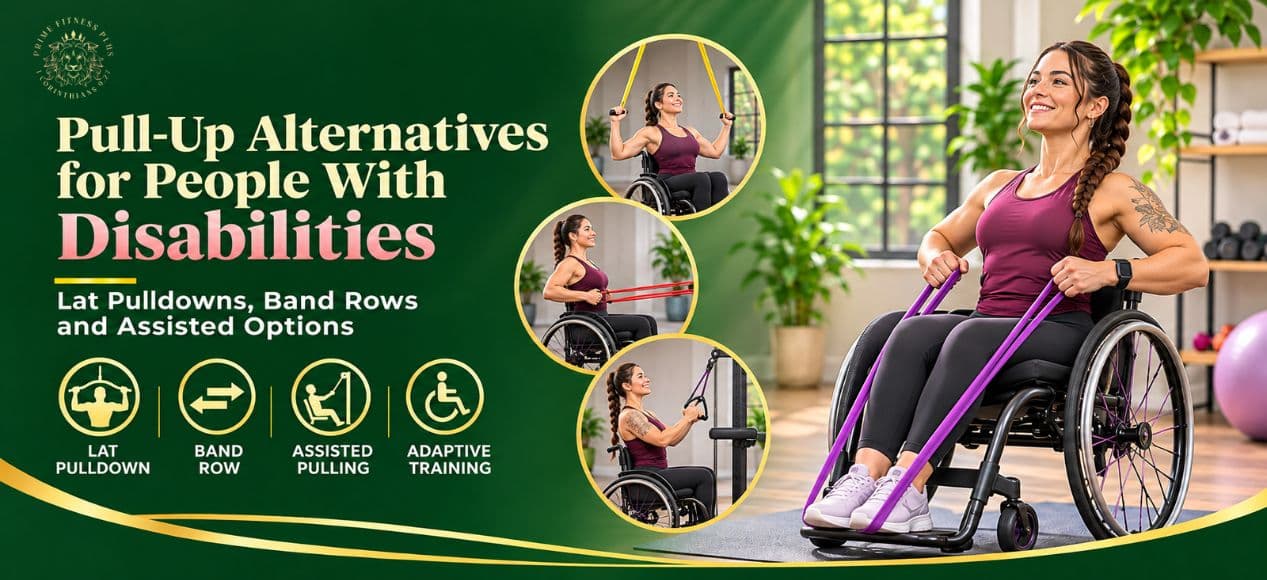
1. Seated Band Row
Anchor a band in front of you at chest height. Sit tall, pull the handles toward your lower ribs and squeeze your shoulder blades together. Return slowly. This is the best starting point for almost everyone.
2. Band Lat Pulldown
Anchor a band above you, such as over a door with a door anchor. Pull the band down toward your chest, leading with your elbows. This copies the pull-up movement with a load you can control.
3. Lat Pulldown Machine
Many lat pulldown machines let you roll a wheelchair under the bar or transfer to the seat. Use a grip slightly wider than your shoulders and pull the bar to your upper chest. Keep your trunk steady. If your trunk control is limited, use a chest strap or a lighter weight.
4. Assisted Pull-Up
For people who can grip a bar and bear some weight through their body, an assisted pull-up machine or a thick band looped over the bar takes part of your body weight. Reduce the assistance over time.
5. Slow Negatives
Use a step or a helper to get your chin above the bar, then lower yourself as slowly as you can, ideally over 3–5 seconds. Negatives build strength quickly but cause more muscle soreness, so start with 3–4 reps.
What About Muscle-Ups?
A muscle-up is an advanced move that needs strong, controlled pull-ups first. Some adaptive athletes do train it, but it is not a beginner goal. Build up to 8–10 clean pull-ups before trying it, ideally with a coach.