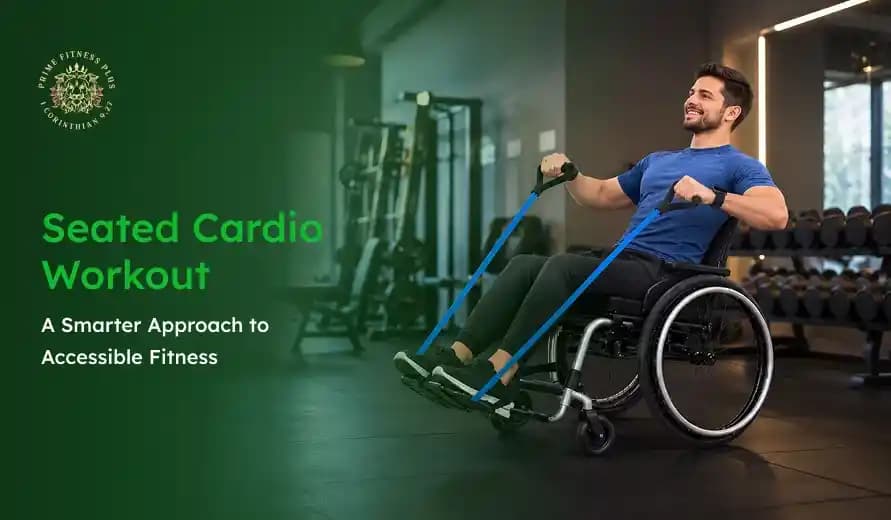
A seated cardio workout offers a practical way to raise the heart rate and work major muscle groups while remaining seated. It can be useful for people with limited mobility, beginners, older adults, those recovering from an injury, or anyone who needs a lower-impact exercise option. The goal is not to make every workout intense. The goal is to create regular movement that fits the person, the available space, and the level of comfort.
What Is a Seated Cardio Workout?
A seated cardio workout is a form of aerobic exercise performed while seated in a stable chair. It uses repeated movements such as seated marching, arm punches, knee lifts, toe taps, and arm circles. These movements can raise breathing and heart rates without requiring standing, jumping, or rapid changes in position.
A chair should be firm and stable, and placed on a flat surface. A chair without wheels is generally a better choice. Keep enough space around the chair so the arms and legs can move freely.
For people who use wheelchairs, similar movements can form part of wheelchair cardio exercises when adapted to their mobility level and chair setup. The movements can be performed at different speeds and ranges, according to individual ability.
Who Can Benefit From Seated Cardio Exercise?
Seated cardio can suit many people, but the appropriate level depends on individual ability and health needs.
People with limited mobility may opt for seated movements when standing exercises are difficult. Older adults may use chair-based routines as a gentle starting point for regular activity. Beginners can start with seated sessions before adding standing movements.
It can also help people who spend long periods sitting at work or at home. Short movement sessions can break up prolonged periods of inactivity. During recovery from a temporary physical limitation, chair-based exercise may be practical if approved by a healthcare professional.
For people looking for exercise for wheelchair users, chair-based cardio can provide another way to include regular physical activity without requiring standing. A routine can be adjusted according to comfort, movement range, and physical ability.
Seated Cardio Workout Benefits: Why Seated Cardio Workout Can Help
1. Supports Heart and Lung Fitness
Repeated movements can raise the heart and breathing rates. With regular practice, aerobic activity can support cardiovascular fitness and help the body handle everyday physical tasks.
2. Provides Low-Impact Movement
Because the body remains supported by a chair, there is less impact on the feet and lower joints than during activities such as running or jumping. This can make seated exercise a useful option for people who need to limit impact.
3. Works Several Muscle Groups
A well-planned seated routine can engage the legs, hips, shoulders, arms, and core. Moving the arms while marching the legs can create a full-body session without standing.
4. Can Support Daily Movement Habits
A workout need not be long to have a place in a person's routine. A 10- to 20-minute seated session may be easier to fit into a busy day than a long gym visit.
5. Can Fit Different Fitness Levels
The speed, range of motion, rest periods, and exercise selection can be adjusted. A beginner can use slower movements and longer breaks, while a more experienced person can increase the pace or add light resistance.
A chair cardio workout can also be adjusted for people who need seated movement as their main form of exercise. Changing the pace or rest period can make the same routine suitable for different fitness levels.
Best Seated Cardio Exercises
Seated Marching
Sit tall with both feet on the floor. Lift one knee a few inches, lower it, then lift the other knee. Continue at a steady pace. Swing the opposite arm as each knee rises. To increase intensity, speed up while maintaining control.
Seated Knee Lifts
Lift one knee toward the chest while keeping the torso upright. Lower it and repeat on the other side. Keep the movement smooth rather than pulling the knee upward with the hands.
Seated Toe Taps
Place both feet on the floor. Extend one foot forward, gently tap the heel or toe, then bring it back. Repeat on the other side. This simple movement can help warm the legs and increase activity.
Seated Arm Punches
Sit upright and alternate controlled punches forward at chest level. Keep the shoulders relaxed and avoid locking the elbows. You can punch slowly for a lighter session or use a quicker pace for more cardio work.
Seated Side-to-Side Reaches
Reach one arm to the side while keeping the other hand near the body. Return to the centre and switch sides. Keep the movement within a comfortable range and avoid leaning too far.
Seated Jumping-Jack Motion
Open one arm to the side while moving the opposite or both legs outward, then return to the starting position. The exact movement can be adjusted according to mobility. There is no need to mimic a standing jumping jack.
Seated Arm Circles
Extend the arms to the sides or slightly forward. Make small circles for several seconds, then reverse the direction. Smaller circles are suitable when shoulder movement is limited.
These movements can also be used as adaptive cardio exercises because their speed, range, and duration can be adjusted according to individual needs.
A Simple 15-Minute Seated Cardio Routine
A short routine can be organised into three stages: warm-up, cardio, and cool-down.
Minutes 1–3: Warm-Up
Begin with slow seated marching. Add gentle shoulder rolls, arm movements, and toe taps. Focus on comfortable breathing and controlled movement.
Minutes 4–11: Cardio Circuit
Perform each exercise for 45 seconds, followed by 15 seconds of easy movement or rest:
- Seated marching
- Seated arm punches
- Seated knee lifts
- Seated toe taps
- Seated side-to-side reaches
- Seated jumping-jack motion
- Seated marching with arm swings
- Seated arm circles
Repeat the exercises as needed to fill the time. Maintain a pace that keeps you in control. If breathing becomes too difficult, slow down or take a longer break.
Minutes 12–15: Cool-Down
Slow the marching pace and gradually reduce arm movements. Breathe calmly. Finish with gentle shoulder rolls, ankle movements, and relaxed leg extensions if comfortable.
For someone following a wheelchair exercise programme, the same three-stage structure can be adjusted to suit available mobility and energy levels. The exercises need not be performed at the same pace or for the same duration by everyone.
How to Make a Seated Cardio Workout More Challenging
Once the basic routine feels comfortable, there are several ways to increase the workload without standing up.
First, increase the pace in short bursts. For example, march slowly for 30 seconds, then switch to a faster pace for 20 seconds. Second, increase the range of motion when comfortable. Third, combine upper- and lower-body movements, such as knee lifts with arm punches.
Light hand weights can also be used by people who already have good control and no restrictions on resistance exercise. Start with very light weights and maintain good posture. Resistance should never cause pain or make movement difficult to control.
A routine focused on functional fitness for wheelchair users can also include controlled arm movements, reaching patterns, and repeated motions relevant to everyday activities. The specific exercises should match the person's abilities and any professional guidance they have received.
How Often Should You Do Seated Cardio?
The ideal schedule depends on a person's current fitness, age, mobility, and health status. A beginner may start with 10 minutes on several days each week and gradually increase the duration. Someone who is already active may opt for longer sessions or add seated cardio to a broader exercise routine.
Consistency matters more than trying to complete a very demanding session once in a while. Seated cardio can also be combined with strength training, flexibility exercises, balance training, and regular walking when those activities are suitable.
Safety Tips for Chair-Based Cardio
Choose a sturdy chair on a non-slip surface and check that it does not move easily. Sit far enough back to feel supported while keeping the feet free to move.
Start slowly and allow the body time to warm up. Keep breathing normally rather than holding your breath. Stop if you experience sharp pain, severe dizziness, unusual shortness of breath, chest pressure, or any other concerning symptom. People with a medical condition, recent surgery, significant injury, or specific exercise restrictions should consult a qualified healthcare professional to determine which activities are appropriate before starting.
The movements should feel controlled. Fast movement is not inherently better. Good posture, steady breathing, and a comfortable range of motion matter more than speed.
Seated Cardio vs. Traditional Cardio
Traditional cardio often includes activities such as walking, cycling, jogging, and swimming, which may require standing or full-body movement. Seated cardio uses a chair to provide support and reduce the need for weight-bearing movement.
This makes chair-based exercise a useful option when standing is difficult or not currently suitable. It can also serve as a temporary or complementary form of exercise. The best choice depends on mobility, fitness level, goals, and personal comfort.
For people who use wheelchairs, wheelchair cardio exercises may offer another format for aerobic activity when adapted to individual movement capacity. A healthcare or fitness professional can help determine which movements are suitable.
Final Words
A seated cardio workout offers a practical way to stay active without needing a gym, a large space, or standing exercises. With simple movements such as marching, knee lifts, toe taps, punches, and arm circles, a chair can serve as the base for a structured cardio session.
The most useful routine is one that matches your current ability and can be repeated consistently. Start at a comfortable pace, pay attention to how your body responds, and gradually increase the workload. For anyone who finds standing exercises difficult, seated cardio can provide a meaningful way to keep moving and build a regular fitness habit.