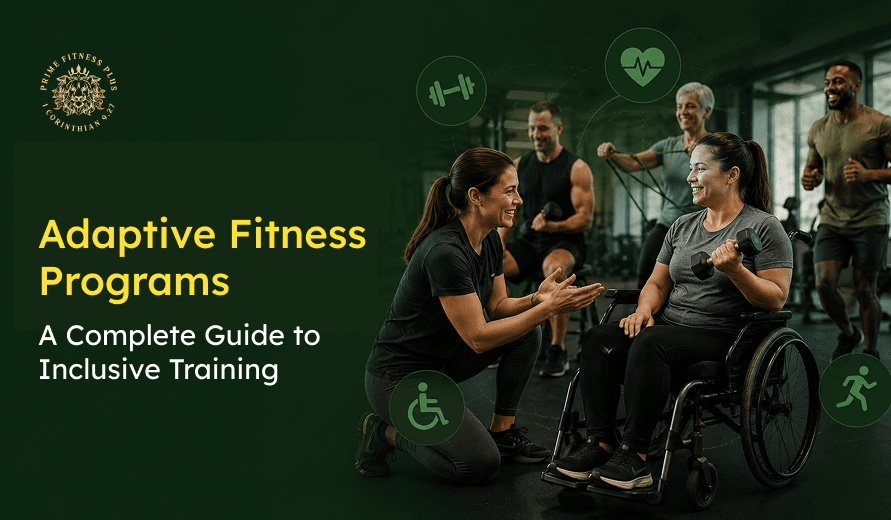
For wheelchair users, the upper body does far more work than it does for most people. Every push of the wheels, every transfer, every reach overhead relies on the arms, shoulders, and back to do the job the legs would normally share. That makes upper body strength less about building muscle for its own sake and more about protecting your joints, reducing fatigue, and keeping daily movement easier over the long run.
This guide covers why upper body strength matters specifically for wheelchair users, a set of seated exercises you can do with minimal equipment, and tips for adapting them to your ability level.
Why Upper Body Strength Matters for Wheelchair Users
The shoulders, in particular, take on a heavy and repetitive workload — propelling the wheelchair, pushing up from a seated position, and supporting the body during transfers. Over time, this repetitive strain is a leading cause of shoulder pain and overuse injuries among long-term wheelchair users.
Building balanced upper body strength training helps distribute that workload more evenly across the chest, back, shoulders, and arms, rather than letting any single muscle group absorb all the strain. A stronger, more balanced upper body also means less fatigue during the day and a lower risk of the overuse injuries that can limit independence over time.
How Strength Training Supports Daily Function
Beyond injury prevention, upper body strength directly supports:
- Wheelchair propulsion — smoother, more efficient pushing with less shoulder strain
- Safer transfers — more control when moving to a bed, car, or shower seat
- Better posture — a stronger back counteracts the forward-rounding that comes from constant pushing and reaching
- Easier reaching and lifting — whether it's grabbing something off a shelf or carrying groceries
- Reduced pain over time — balanced muscle development protects the shoulder joint from repetitive stress
6 Upper Body Strength Exercises for Wheelchair Users
These can be done in your wheelchair using light dumbbells, resistance bands, or just your body weight to start. Focus on control and full range of motion rather than speed or heavy loads.
1. Seated Shoulder Presses
Hold a light dumbbell in each hand at shoulder height, palms facing forward. Press both arms overhead until nearly straight, then lower with control. This targets the shoulders and triceps and mirrors the overhead reaching used in daily tasks.
2. Resistance-Band Rows
Anchor a resistance band at chest height in front of you. Hold one end in each hand, pull your elbows back and squeeze your shoulder blades together, then release slowly. Rows strengthen the upper back, which helps counteract the forward posture common from frequent pushing and reaching.
3. Seated Chest Presses
Using a resistance band anchored behind you or light dumbbells, press your arms forward from chest height until nearly extended, then return slowly. This builds the pressing strength used in transfers and pushing up from the chair.
4. Bicep Curls
Hold a dumbbell in each hand, palms facing forward, and curl toward your shoulders with control, then lower slowly. Strong biceps support pulling motions, like adjusting your position or pulling yourself toward a surface during a transfer.
5. Tricep Extensions
Hold one dumbbell with both hands behind your head, elbows pointing up. Extend your arms upward until nearly straight, then lower slowly back behind your head. Strong triceps support the pushing motion used when propelling a manual wheelchair or pressing up from a seated position.
6. Seated Lateral Raises
With a light dumbbell in each hand at your sides, raise your arms out to shoulder height, then lower with control. This targets the often-neglected side deltoids, which play a key stabilizing role during wheelchair propulsion and reaching to the side.
How to Adapt These Exercises for Different Abilities
- Start with no added weight if shoulder pain or limited range of motion is a concern — bodyweight or light resistance bands are enough to build a foundation.
- Reduce range of motion on presses or raises if full extension feels unstable or uncomfortable.
- Use a strap or seatbelt for extra trunk support during exercises that involve reaching or extension.
- Shorten sets and build up gradually rather than pushing through fatigue, especially for anyone managing existing shoulder strain.
- Swap dumbbells for resistance bands if grip strength or joint stress is a concern — bands provide adjustable resistance without the impact of gripping weight.
Safety Tips for Seated Strength Training
- Warm up first with a few minutes of arm circles or light movement before adding resistance.
- Prioritize form over weight — a lighter load done correctly builds more usable strength than a heavier one done with poor control.
- Watch for shoulder pain, not just normal muscle fatigue. Sharp or pinching pain is a sign to stop and reassess.
- Balance pushing and pulling exercises (like presses and rows) to avoid overdeveloping one side of the shoulder joint at the expense of the other.
- Check in with a physical therapist before starting, especially if you already experience shoulder pain or have a recent injury.
How Often Should You Train Your Upper Body?
Two to three sessions per week, with at least one rest day between sessions, is a solid starting point. This allows the shoulders — which are already under daily stress from wheelchair use — enough recovery time between workouts. As strength builds, you can gradually increase resistance, reps, or frequency.
Building a Simple Wheelchair Upper Body Workout
A basic starting routine:
- Warm-up: Arm circles and light shoulder rolls — 1–2 minutes
- Push: Seated shoulder presses — 2 sets of 10 reps
- Pull: Resistance-band rows — 2 sets of 10 reps
- Push: Seated chest presses — 2 sets of 10 reps
- Isolation: Bicep curls and tricep extensions — 2 sets of 10 reps each
- Stabilization: Seated lateral raises — 2 sets of 10 reps
This balances pushing and pulling movements, which is key to protecting the shoulders long-term, and can be completed in about 20 minutes.
Conclusion
Upper body strength is one of the most important areas for wheelchair users to train consistently, not just for strength itself but for protecting the shoulders from the repetitive demands of daily movement. A simple, balanced routine of seated upper body workout exercises — combining pushing, pulling, and isolation movements — can reduce pain, improve function, and support long-term independence.