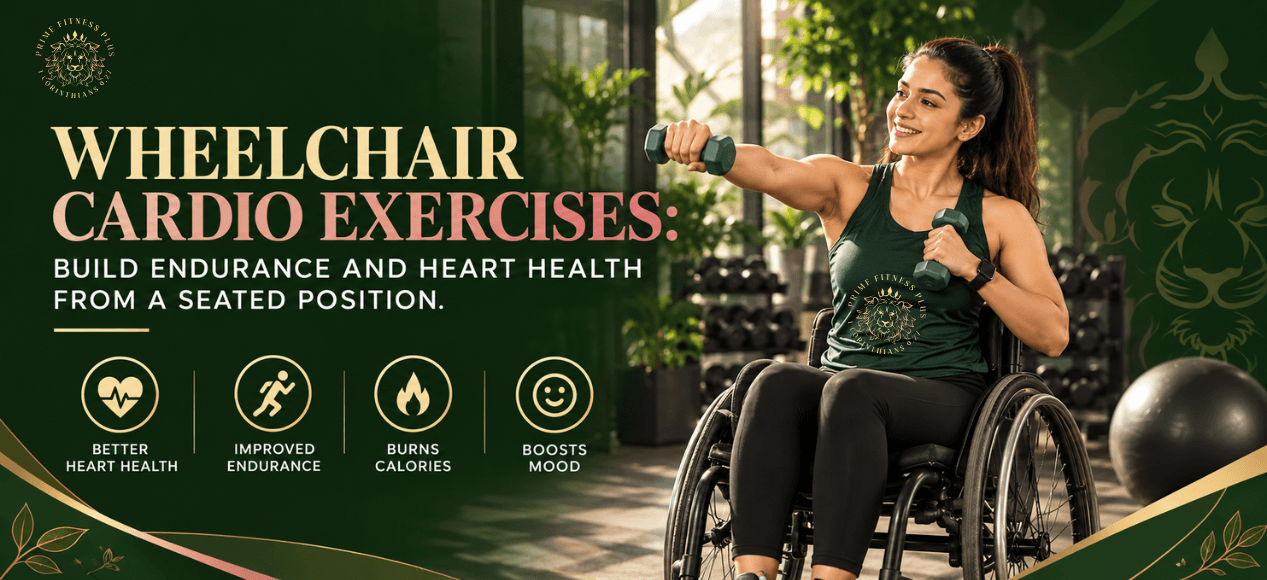
Cardio is often the missing piece in a wheelchair fitness routine. Many people focus on strength and flexibility, but heart and lung fitness matter just as much. Good endurance means less fatigue when pushing, more energy through the day, and better long-term heart health.
The good news is that you don’t need a gym or standing exercises to get a real cardio workout. This guide explains why cardio matters for wheelchair users, how to pick the right intensity, and which seated exercises can raise your heart rate safely.
Why Cardio Matters for Wheelchair Users
Cardio exercise strengthens the heart and lungs and improves how efficiently your body uses oxygen. For wheelchair users, this matters even more because daily life often involves less overall movement. Lower activity levels can raise the risk of heart disease, weight gain, and low energy.
Regular wheelchair cardio exercises help counter this. They support heart health, improve stamina, and make everyday tasks like pushing up a ramp or getting through a long day feel less tiring.
How Cardio Supports Everyday Life
Consistent cardio training can bring practical benefits beyond fitness numbers:
- More stamina for pushing, transfers, and daily errands
- Better heart and lung health over the long term
- Improved mood and sleep through regular physical activity
- Healthy weight management by increasing daily energy use
- Faster recovery between strength sessions and busy days
How to Measure Your Effort Safely
Before the exercises, it helps to know how hard to work. For most people, the simplest method is the talk test. During moderate cardio, you should be able to talk but not sing. If you can’t speak a full sentence, ease off.
You can also use a 1–10 effort scale, where 1 is resting and 10 is maximum effort. Aim for about a 5–6 for moderate intensity.
Heart rate targets may be less reliable for some people, particularly those with certain spinal cord injuries, where heart rate response can be different. If this applies to you, ask your doctor or physical therapist how to track effort safely.
6 Seated Cardio Exercises for Wheelchair Users
Start with 5–10 minutes and build up gradually. Keep your breathing steady and your movements controlled.
1. Arm Circles
Extend your arms out to the sides and make small circles, then gradually increase the size. Switch direction after 30 seconds. This is a gentle way to warm up the shoulders and raise your heart rate slightly.
2. Seated Punching
Sit tall and punch forward in alternating jabs at a steady pace. You can speed up for short bursts, then slow down to recover. Punching also engages the core and shoulders, making it a full upper body cardio option.
3. Seated Marching
Lift your knees one at a time in a marching rhythm, if your mobility allows. Add arm swings to increase the effort. If leg movement isn’t possible, march your arms instead by pumping them in a walking motion.
4. Overhead Reaches
Reach one arm overhead, then the other, in a steady rhythm. Speed it up gradually to raise your heart rate. This also loosens the shoulders and upper back.
5. Resistance-Band Pulls
Anchor a light resistance band in front of you and pull it toward your chest in a quick, controlled rhythm. Aim for a pace that challenges your breathing without sacrificing form. The band adds resistance, so your muscles and heart both work harder.
6. Hand-Cycle or Arm-Ergometer Intervals
If you have access to a hand cycle or arm ergometer, alternate 1 minute of faster pedaling with 1–2 minutes at an easy pace. This is one of the most effective ways to build endurance and is widely used in adaptive fitness settings.
How to Adapt Cardio for Different Abilities
- Start with shorter bursts, such as 30 seconds of activity followed by 30 seconds of rest, and build from there.
- Choose arm-only movements if leg movement isn’t possible. Upper body cardio is still effective.
- Lower the intensity by slowing the pace or reducing the range of motion.
- Use interval training to make workouts more manageable. Alternating hard and easy effort often feels more doable than steady exercise.
- Use a strap or seatbelt for trunk support during fast or wide arm movements.
Safety Tips for Seated Cardio
- Warm up first with 3–5 minutes of easy movement.
- Stay hydrated before, during, and after exercise.
- Watch for warning signs such as dizziness, chest pain, unusual shortness of breath, or severe fatigue. Stop and seek medical advice if these occur.
- Avoid overheating, especially if your body regulates temperature differently. Exercise in a cool, well-ventilated space.
- Cool down with slow movements and light stretching.
- Talk to your doctor or physical therapist before starting, particularly if you have a heart condition, a spinal cord injury, or blood pressure concerns.
How Often Should You Do Cardio?
General US physical activity guidelines for adults with disabilities suggest working toward about 150 minutes of moderate-intensity aerobic activity per week, when it’s safe and possible for you. That might look like 30 minutes on five days, or shorter 10-minute sessions spread through the day. If you’re just starting, begin with whatever feels manageable and build gradually. Some activity is always better than none.
Building a Simple Wheelchair Cardio Workout
Here’s a beginner-friendly 20-minute routine:
- Warm-up (3 minutes): Arm circles and gentle shoulder rolls
- Round 1 (4 minutes): Seated punching — 30 seconds fast, 30 seconds easy
- Round 2 (4 minutes): Overhead reaches — 30 seconds fast, 30 seconds easy
- Round 3 (4 minutes): Resistance-band pulls — 30 seconds fast, 30 seconds easy
- Optional round (3 minutes): Seated marching or arm marching
- Cool-down (2 minutes): Slow breathing and light stretching
As your fitness improves, extend the fast intervals or add another round.
Conclusion
Cardio is a key part of a balanced wheelchair fitness routine. It supports heart health, builds endurance, and helps everyday tasks feel easier. With simple seated movements, a sensible intensity, and consistent practice, you can build real stamina without any special equipment. Start small, listen to your body, and increase your effort gradually.