Stretching keeps joints moving, reduces stiffness and makes daily tasks easier. For people with disabilities, regular stretching can also help manage tight muscles caused by long periods of sitting, limited movement or conditions such as cerebral palsy, MS or spinal cord injury.
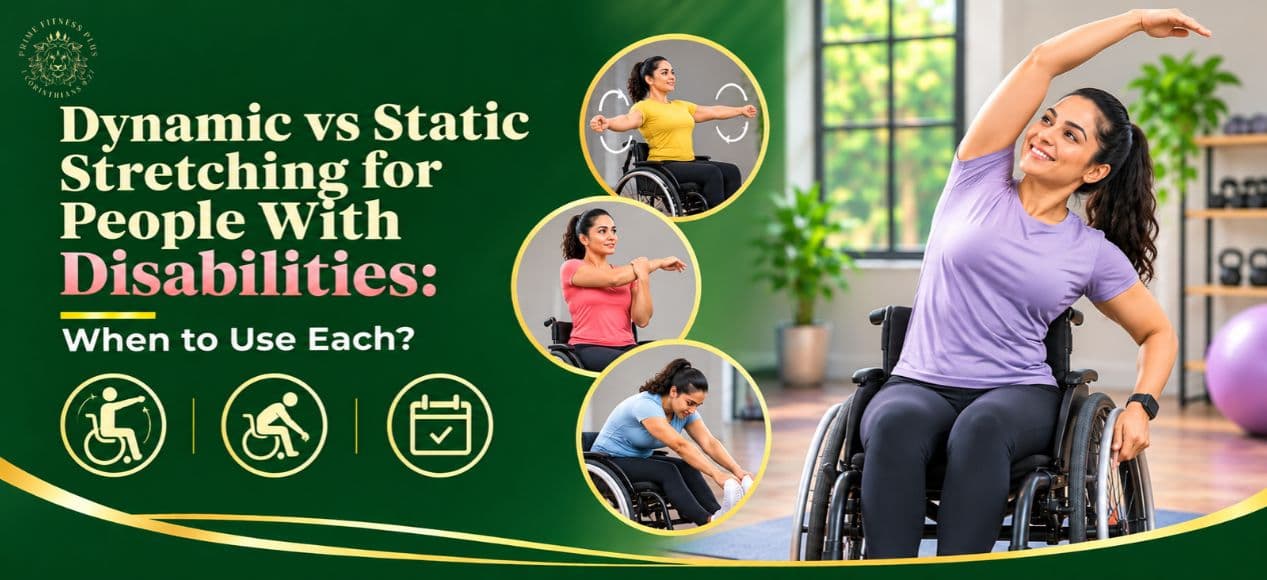
There are two main types of stretching: dynamic and static. They do different jobs, and using the right one at the right time makes your workouts safer and more effective.
This guide explains both types with seated examples. For a full routine, see our guide to wheelchair stretching exercises.
Dynamic Stretching: Use It Before Exercise
Dynamic stretches raise your heart rate slightly, warm the muscles and prepare your joints for the work ahead. Spend 5–8 minutes on them before strength or cardio training.
Seated dynamic stretches:
- Arm circles: small circles forward, then backward, slowly growing bigger.
- Trunk rotations: cross your arms over your chest and turn gently left and right.
- Shoulder rolls: roll your shoulders up, back and down.
- Seated marching: lift one knee, then the other, if you have leg movement.
- Reach and pull: reach both arms forward, then pull your elbows back and squeeze your shoulder blades.
Move smoothly. Do not bounce or swing hard into the end of the range.
Static Stretching: Use It After Exercise
Static stretches lengthen muscles and improve flexibility over weeks of practice. Muscles stretch best when they are warm, so do them after a workout or after a short warm-up.
Seated static stretches:
- Chest stretch: hold a doorframe or clasp your hands behind your back and gently open your chest.
- Overhead triceps stretch: reach one hand down your upper back and gently press the elbow with the other hand.
- Neck side stretch: tilt your ear toward your shoulder.
- Seated hamstring stretch: straighten one leg on a stool and lean forward slightly from the hips.
- Wrist and forearm stretch: extend your arm and gently pull your fingers back.
Hold each stretch for 15–30 seconds. You should feel mild tension, not pain. Breathe slowly and repeat 2–3 times.
Stretching With Spasticity or Low Muscle Tone
If you have spasticity, slow and steady stretches usually work better than fast movement, which can trigger muscle spasms. Avoid bouncing. If you have low muscle tone or very flexible joints, focus on strength and stability, not on stretching further. A physical therapist can tell you which muscles need stretching and which need strengthening.
A Simple Weekly Plan
- Before every workout: 5 minutes of dynamic stretching.
- After every workout: 5–10 minutes of static stretching.
- On rest days: a short static stretching session for tight areas.
Stretching works best alongside strength training. A strong trunk helps you hold better positions while stretching, and our guide to seated core exercises is a good place to start.