The squat and the leg press train the same main muscles: quadriceps, glutes and hamstrings. These muscles help you stand up, sit down, climb steps and transfer between surfaces. For people with disabilities, a full barbell squat or a heavy machine is often not the right starting point.
The good news is that the movement can be adapted. A chair, a box, a resistance band or a leg press machine with a light load can train the same pattern with more support and less risk.
This guide explains which alternative to choose based on your balance, strength and mobility. It builds on our main guide to leg exercises for handicapped adults.
Squat vs Leg Press: What Is the Difference?
A squat is done standing, so it trains balance and core control along with leg strength. A leg press is done seated or lying back, so the machine supports your trunk and balance. If standing balance is limited, the leg press pattern is usually the safer place to start.
Squat Alternatives (Standing or Supported)
Chair squat (sit-to-stand) Sit near the front edge of a sturdy chair with feet flat and hip-width apart. Lean slightly forward and stand up, pushing through your heels. Sit back down slowly. Use the armrests for help if needed. This is the most practical leg exercise because it copies a daily task.
Box squat Stand in front of a bench or box. Lower your hips back until you lightly touch the box, then stand up. The box sets a safe depth and gives you a target every rep.
Supported squat Hold a countertop, rail or the back of a stable chair. Lower into a partial squat and come back up. Holding on lets you focus on leg strength without worrying about falling.
Goblet or front squat Once bodyweight squats feel easy, hold a light dumbbell at your chest. Holding the weight in front keeps your torso more upright, which many people find more comfortable than a barbell on the back.
Leg Press Alternatives (Seated or Lying)
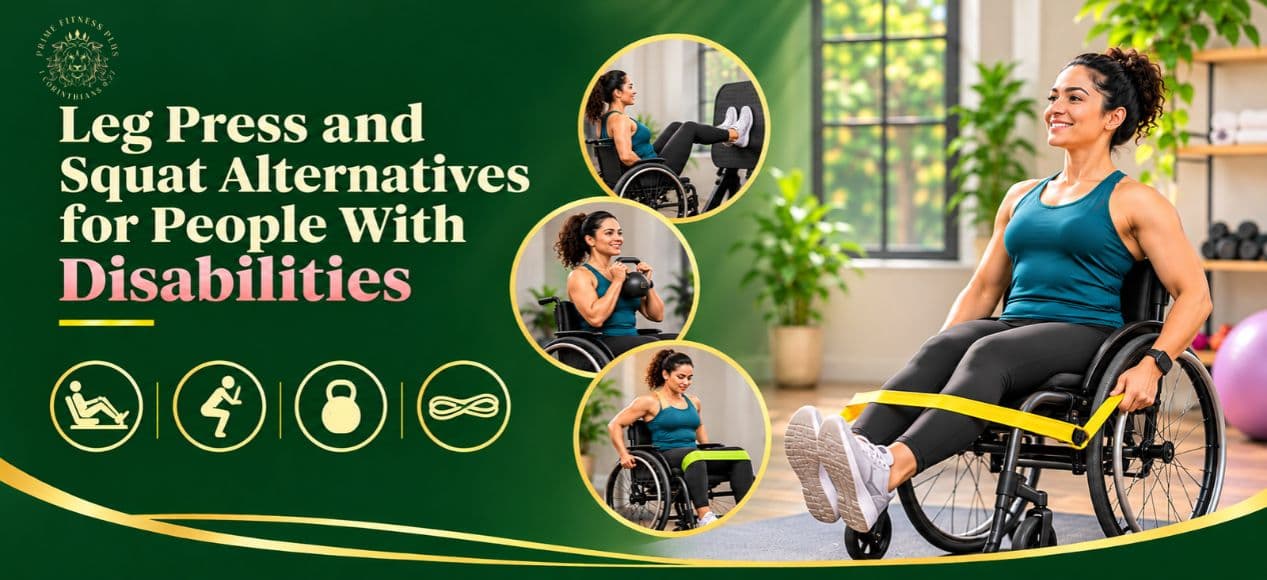
Machine leg press with a light load Many gyms have a seated leg press. Set the seat so your knees bend to about 90 degrees at the start. Push the platform away without locking your knees, then return slowly. Some people can transfer to the machine from a wheelchair with help.
Resistance band leg press Sit in a chair or wheelchair with brakes locked. Loop a band around one foot and hold the ends. Push your foot forward against the band, then return. This works well at home and needs no machine.
Seated leg extension Sit tall and straighten one knee, hold for 2 seconds, then lower. Add an ankle weight when it gets easy. This targets the quadriceps and helps people who cannot yet do a sit-to-stand.
Start with 2 sets of 8–12 reps, 2–3 times a week. Add reps first, then resistance.
Safety Tips
- Keep your knees in line with your toes. Do not let them collapse inward.
- Avoid locking your knees at the top of a leg press.
- Move slowly, especially when sitting down.
- Have someone nearby the first few times you try a standing version.
- Stop if you feel sharp joint pain, numbness or dizziness.
If you have a knee or hip replacement, spasticity or a neurological condition, ask your physical therapist which range of motion is safe for you. Our guide to adaptive strength training explains how to build a full program around these exercises.