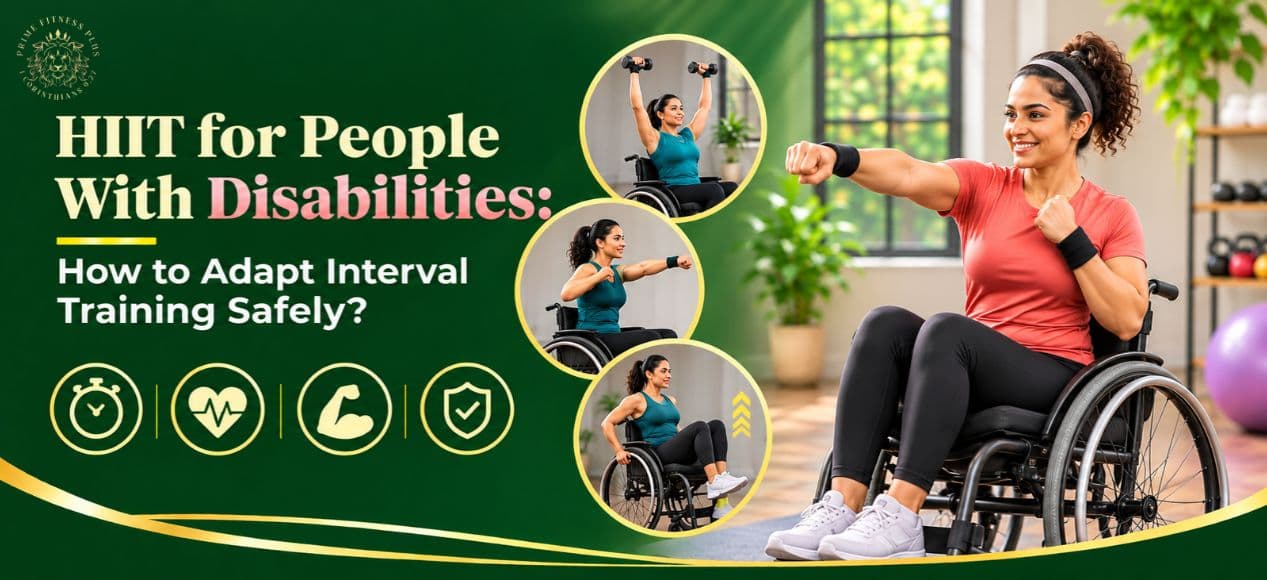
High-intensity interval training (HIIT) alternates short bursts of hard effort with periods of rest or easy movement. It improves heart and lung fitness in less time than steady cardio, which makes it useful for people with busy schedules or limited energy.
HIIT is often shown as jumping, sprinting and burpees, but the method itself is flexible. Any movement that raises your heart rate can be used for intervals, including seated punches, arm cycling and wheelchair pushes.
This guide shows how to adapt HIIT safely. If you are new to cardio, start with our guide to adaptive cardiovascular training first.
How HIIT Works
A HIIT session has three parts:
- Warm-up: 5 minutes of easy movement.
- Intervals: short work periods followed by recovery periods, repeated several times.
- Cool-down: 3–5 minutes of easy movement and stretching.
The work periods should feel hard, about 7–8 on a 0–10 effort scale. You should be able to say only a few words. Recovery periods should feel easy, about 3–4 out of 10.
Use Effort, Not Heart Rate
Heart rate targets do not work well for everyone. Some medications, such as beta blockers, and some conditions, such as a high-level spinal cord injury, change how the heart rate responds to exercise. A 0–10 effort scale is simpler and works for almost everyone.
Start at the beginner level even if you are fit in other ways. Move up when the session feels manageable for two weeks.
Seated HIIT Exercises
- Seated fast punches: punch forward quickly, alternating arms.
- Overhead presses with light dumbbells or no weight: press up and down at a fast pace.
- Arm cycling: use an arm ergometer (hand bike) if your gym has one.
- Wheelchair sprints: push hard for the work period on a safe, flat surface.
- Battle rope waves: many gyms let you do these seated.
- Seated fast feet: tap your feet quickly if you have leg movement.
Burpee Alternatives
Burpees combine a squat, a plank and a jump, which is too much for many people. Try these instead:
- Seated burpee: reach both arms up, then quickly bring your hands down to touch your knees or shins, and back up.
- Chair burpee: stand up from a chair, reach overhead, sit back down.
- Incline burpee: step back into a push-up position with hands on a bench, then step back in.
Sample 15-Minute Seated HIIT Workout
- Warm-up: 5 minutes of arm circles, shoulder rolls and gentle punches.
- 6 rounds of 20 seconds work and 60 seconds rest, rotating seated punches, seated burpees and arm cycling.
- Cool-down: 3 minutes of slow movement and chest and shoulder stretches.
If you want a shorter starting point, try our 10 minute seated cardio workout for two weeks before adding intervals.
Safety Tips
- Get medical clearance first if you have a heart condition, high blood pressure or a spinal cord injury at T6 or above.
- Stop if you feel chest pain, dizziness, a pounding headache or unusual shortness of breath.
- Limit HIIT to 2 sessions a week, with at least 48 hours between them.
- Drink water and avoid training in hot rooms if you have trouble regulating body temperature.